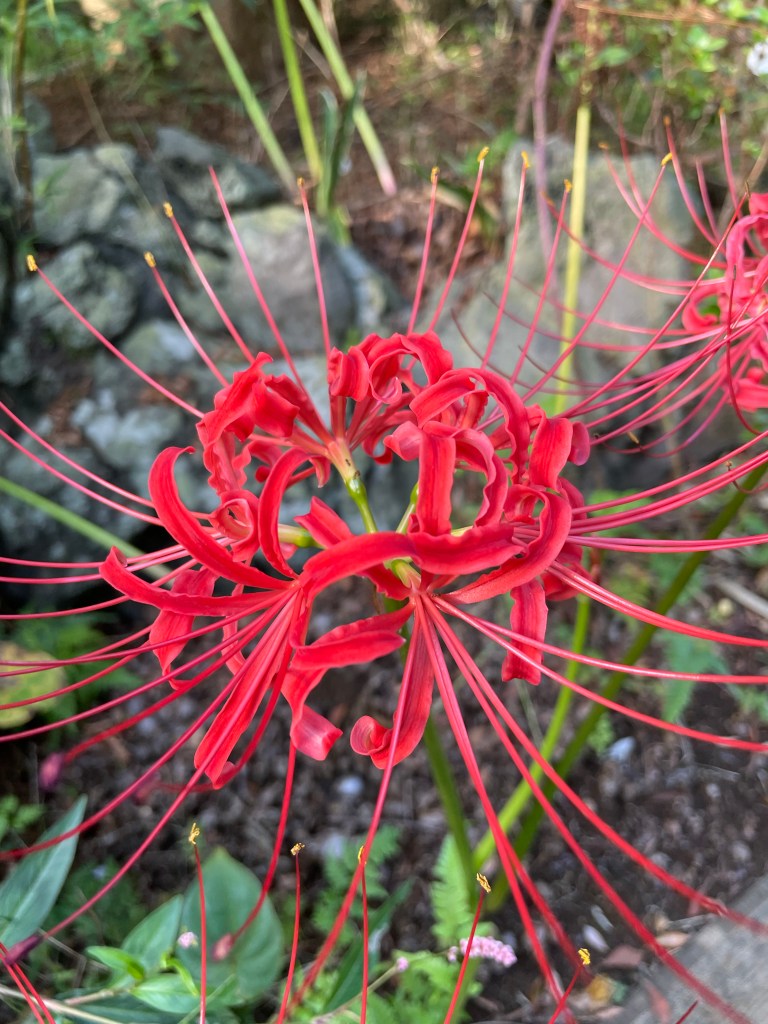
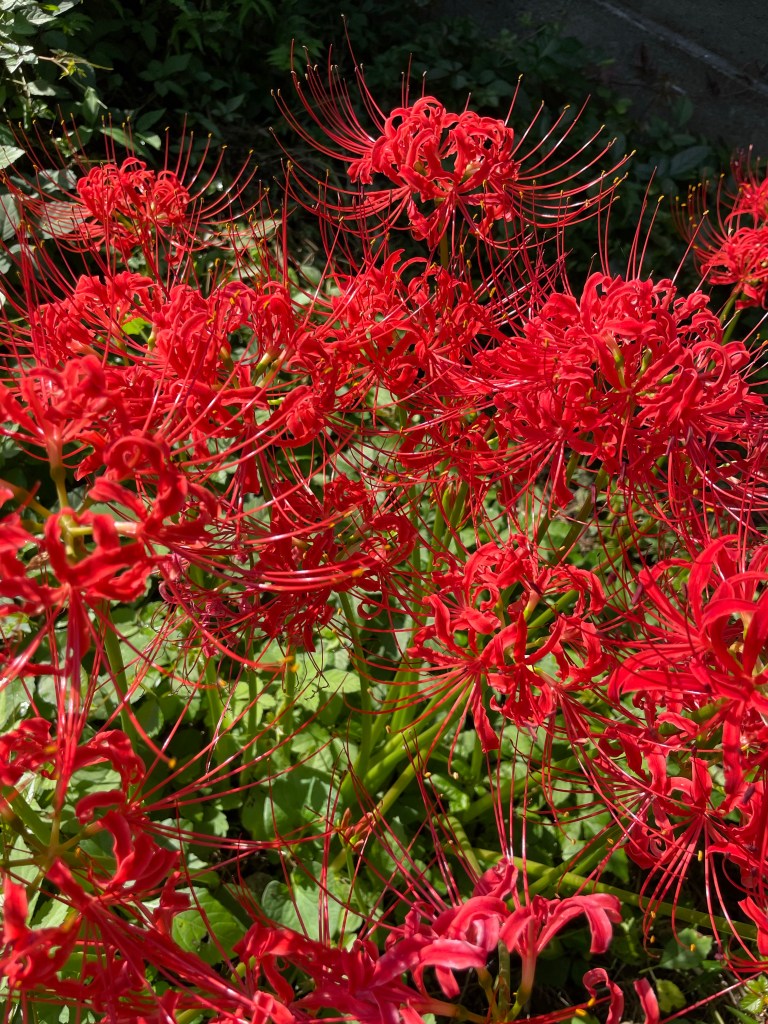
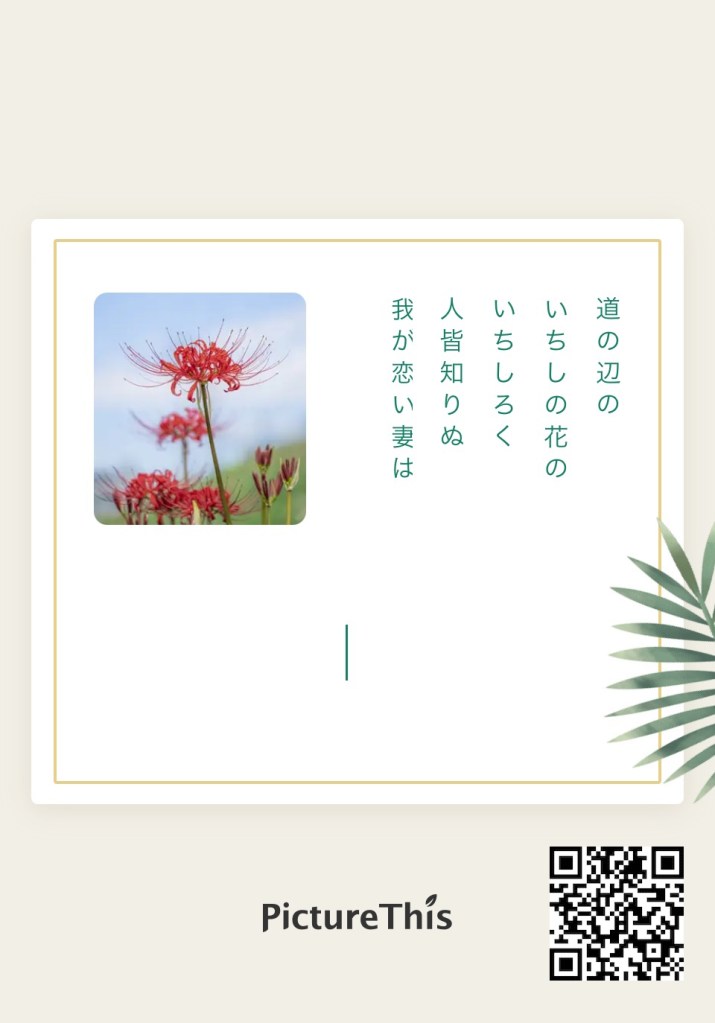
In Japan, higanbana (higanbana) is a flower that grows in clusters alongside roads and on banks, heralding the arrival of autumn. When it comes into bloom, only the stem grows quickly and bears a single red flower, followed by the sprouting of thin leaves. For a long time, it was considered an unlucky flower in Japan, as it was planted in cemeteries and was often associated with death.
Tango has long been a village of textiles, and Tango Chirimen, a silk fabric originated in the Edo period (1603-1867), is supple and dyeable, and has supported Japan’s kimono culture as a representative fabric for yuzen-dyed and other kimono.
The area is still the largest silk weaving center in Japan, producing approximately 60% of the fabric used to make kimonos.
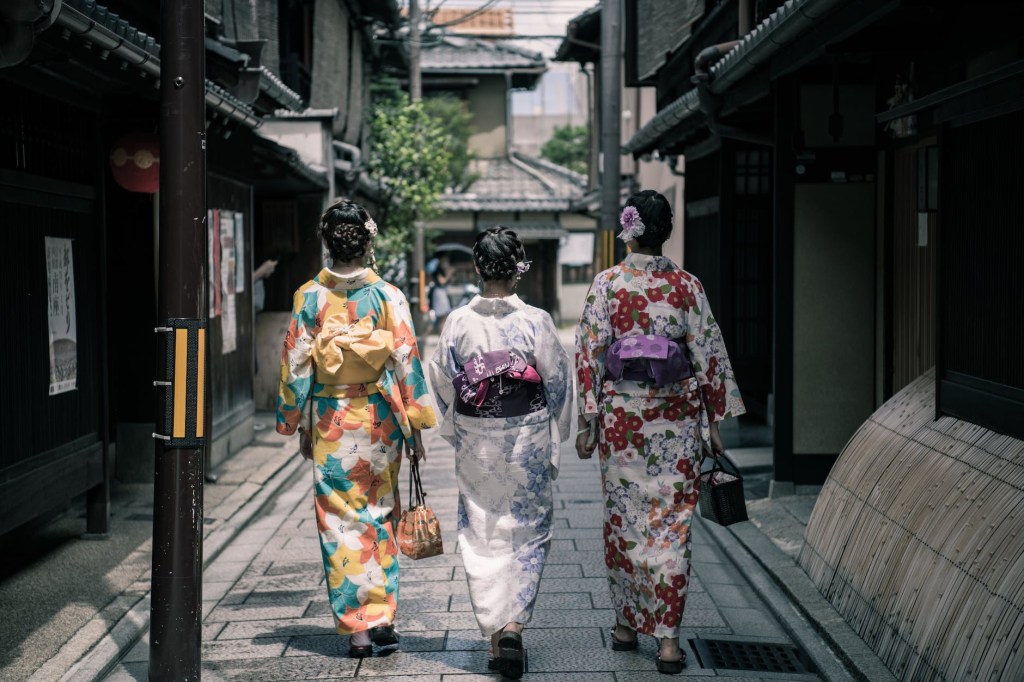
Asakusa is a lovely place to stroll in a kimono. If you would like to try it, you can reserve a kimono rental experience online on Klook (affiliate link).