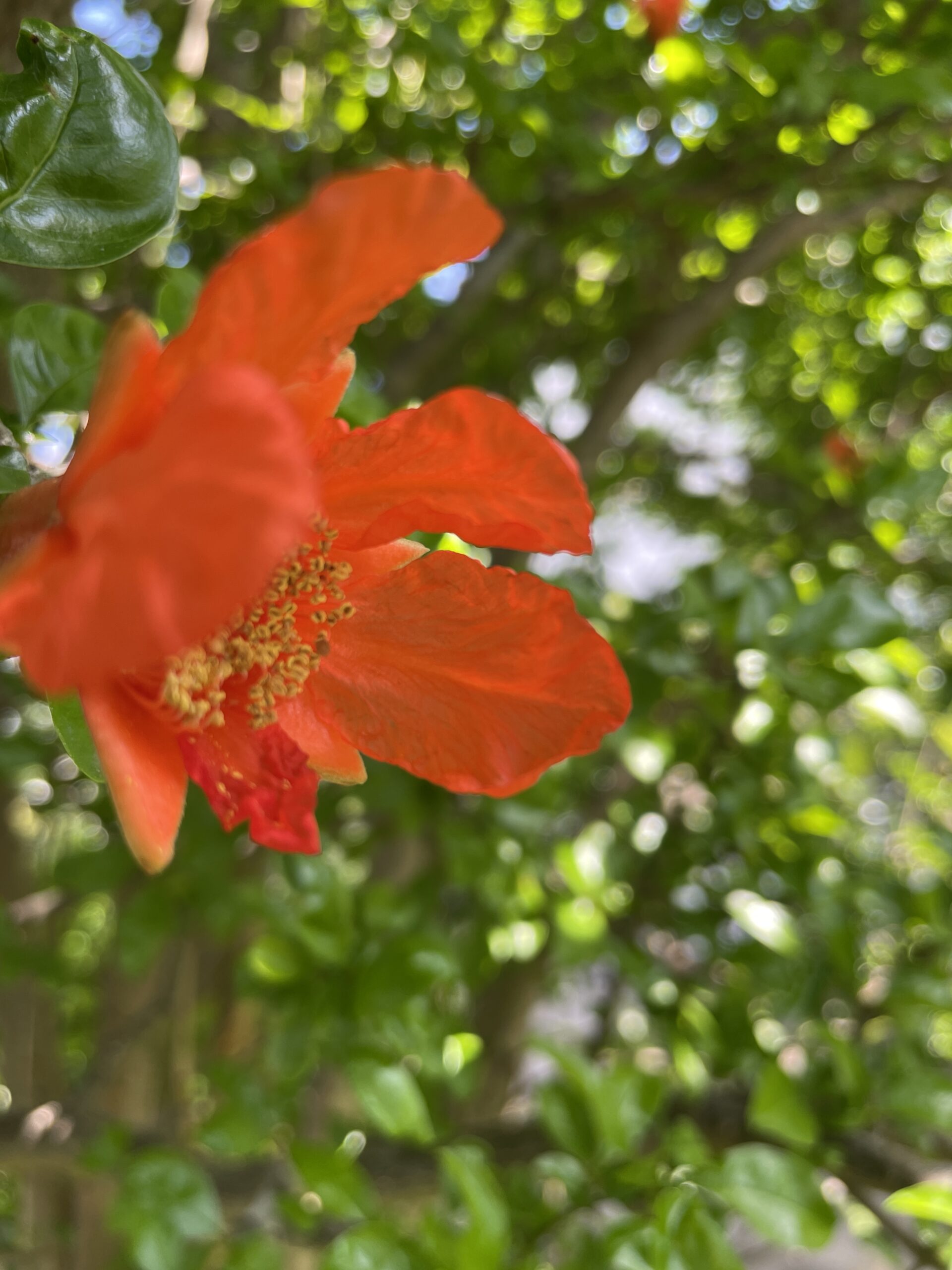
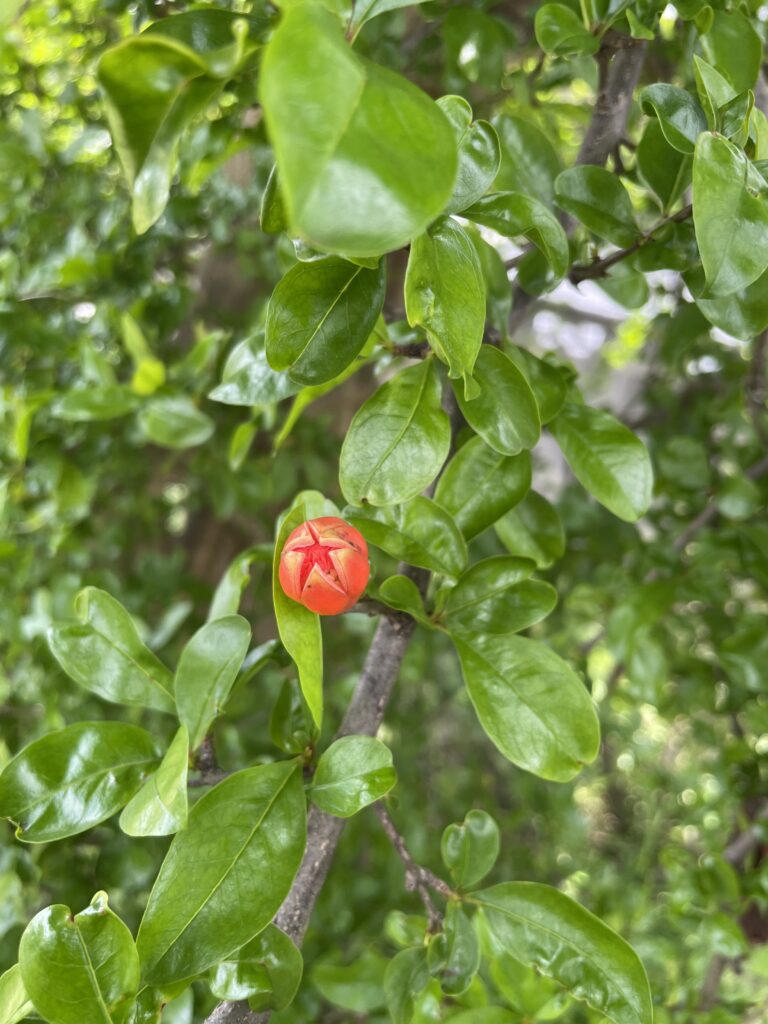
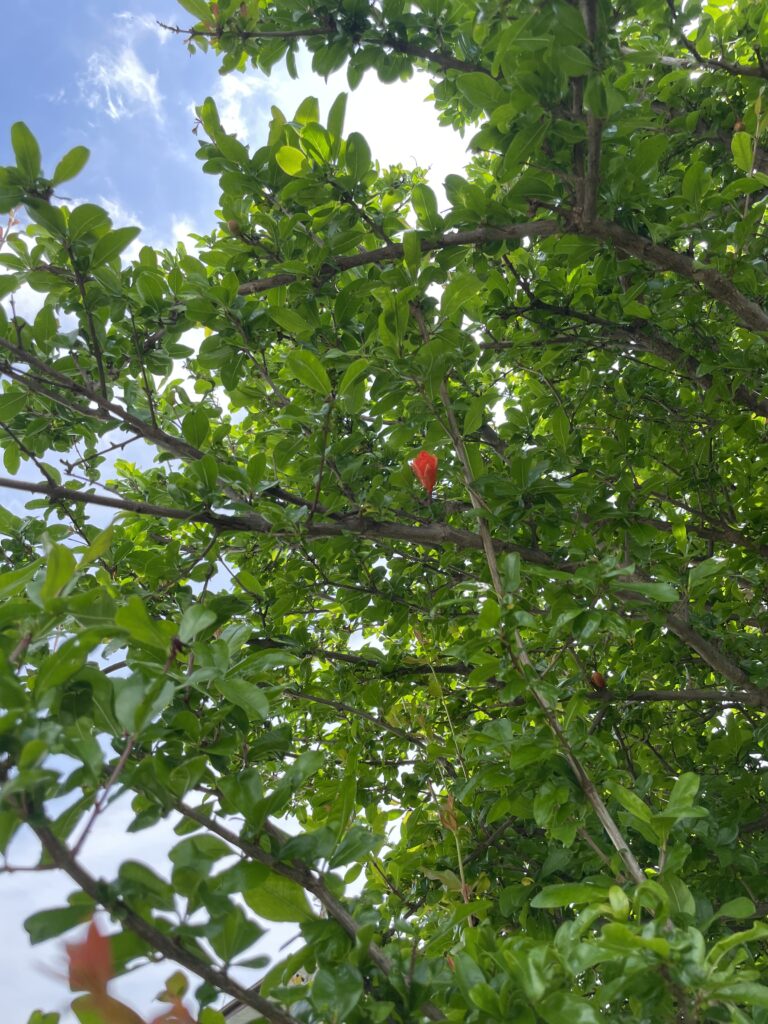
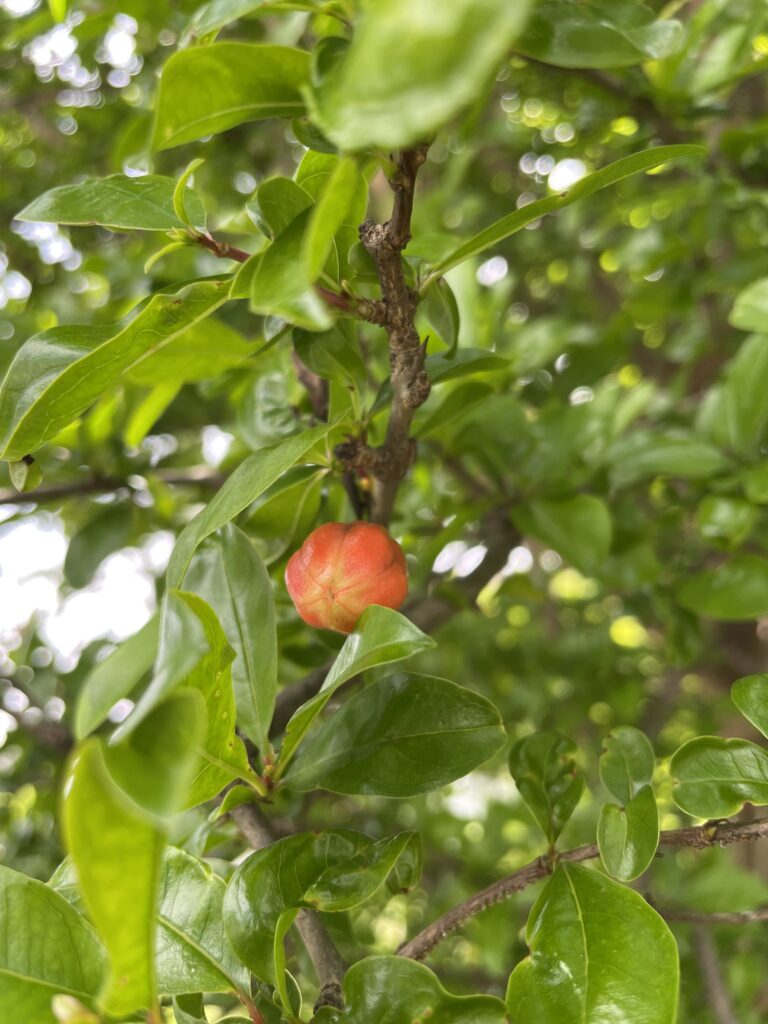
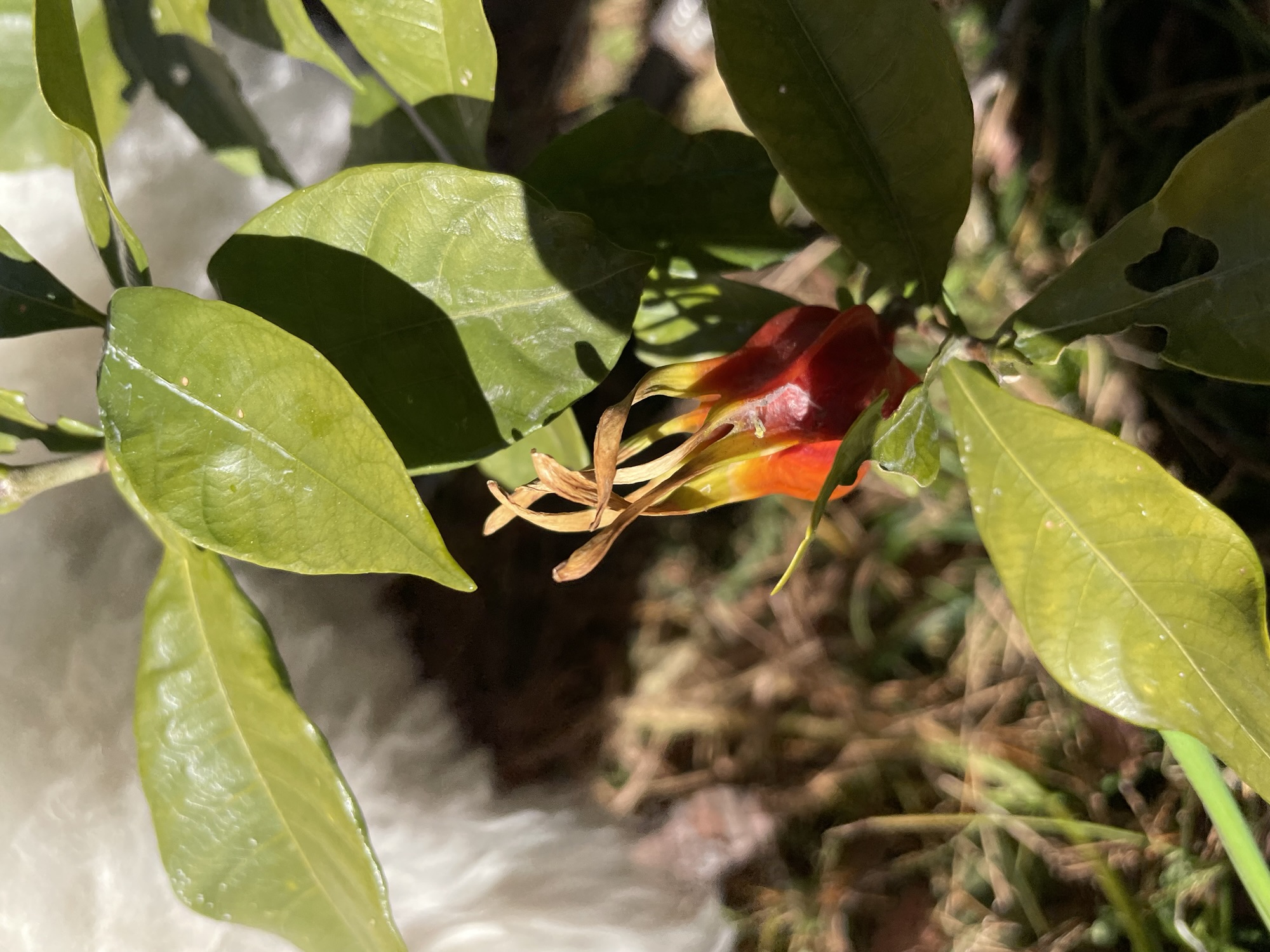
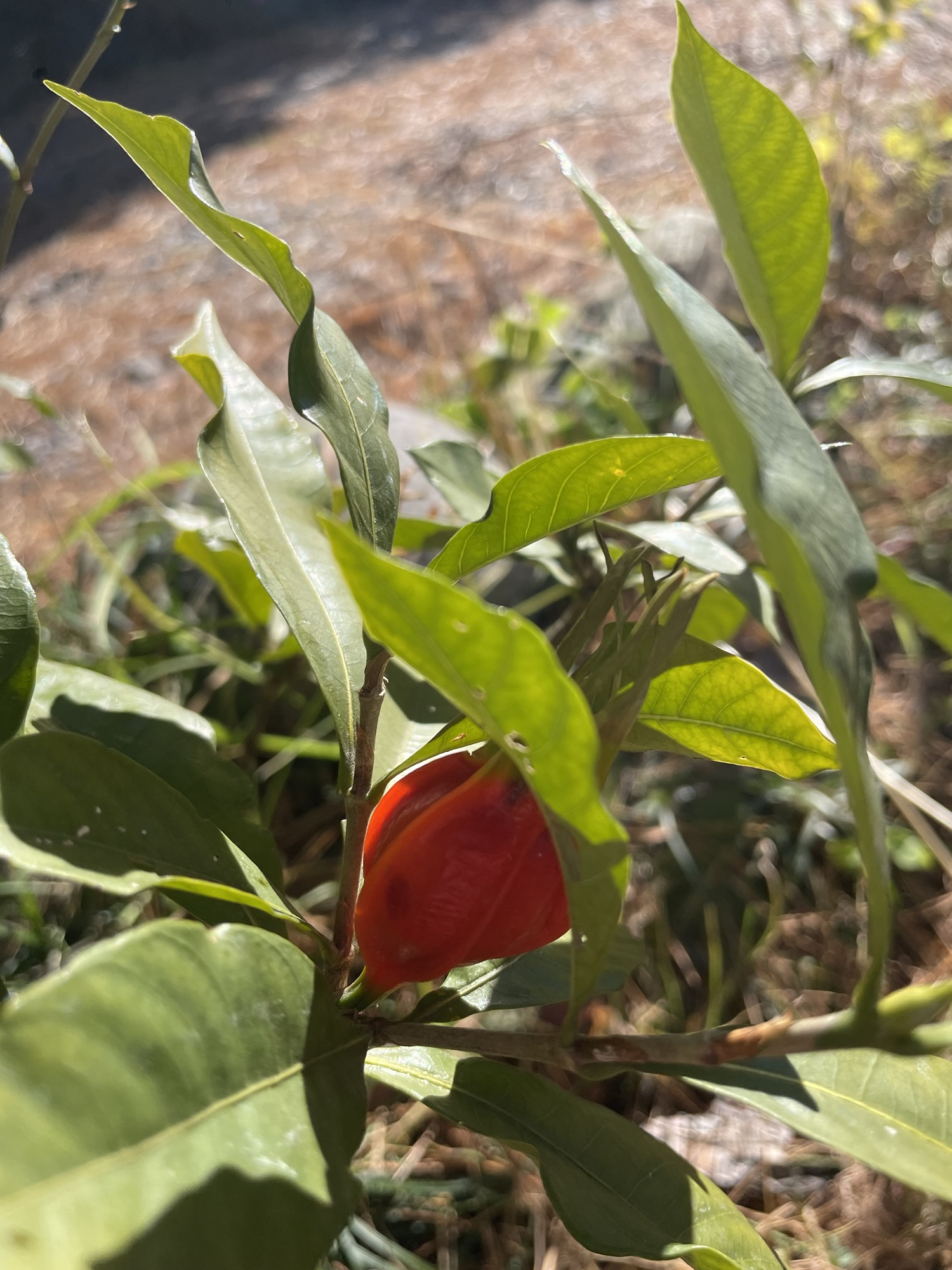
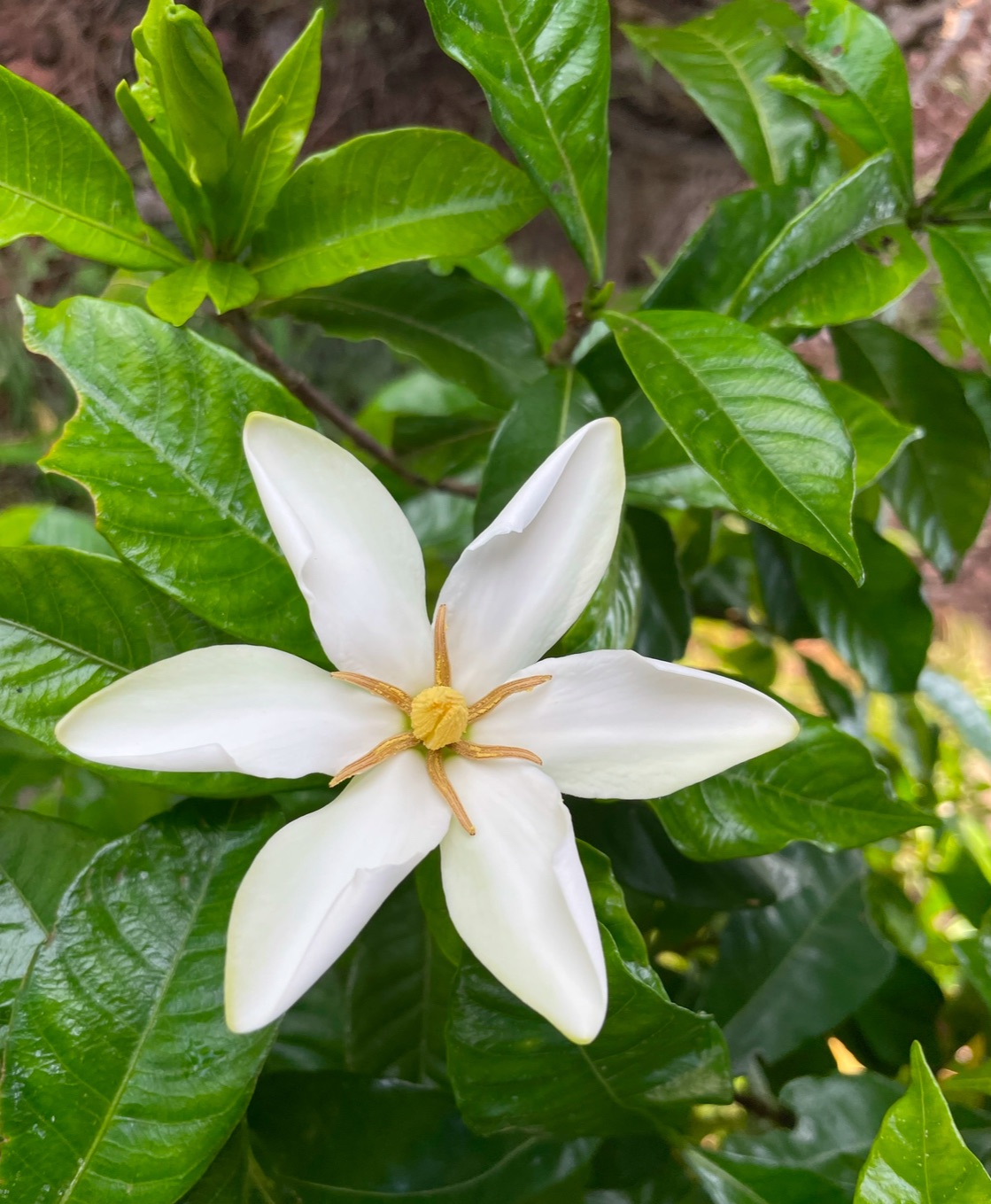
In my garden grows a pomegranate tree that has been here since before I was born — over 50 years old. Every autumn, it produces around 50 bright red fruits, filling the garden with color. This year, I’m finally going to make my own pomegranate vinegar!
The Buddhist Legend of Pomegranate
In Japan, pomegranate has a sacred connection to Buddhism. Kishimojin was a demon who devoured children — until the Buddha offered her a pomegranate as a substitute. She was transformed, becoming a protector of children. Her shrines in Tokyo’s Zoshigaya and Iriya are still visited by many today.
Beauty Secret from Korea to Japan
Pomegranate vinegar is hugely popular in Korea as a beauty drink — great for skin and anti-aging. The recipe is simple: equal parts pomegranate seeds, sugar, and vinegar. Mix and wait one month. I’ll be trying this myself this autumn!
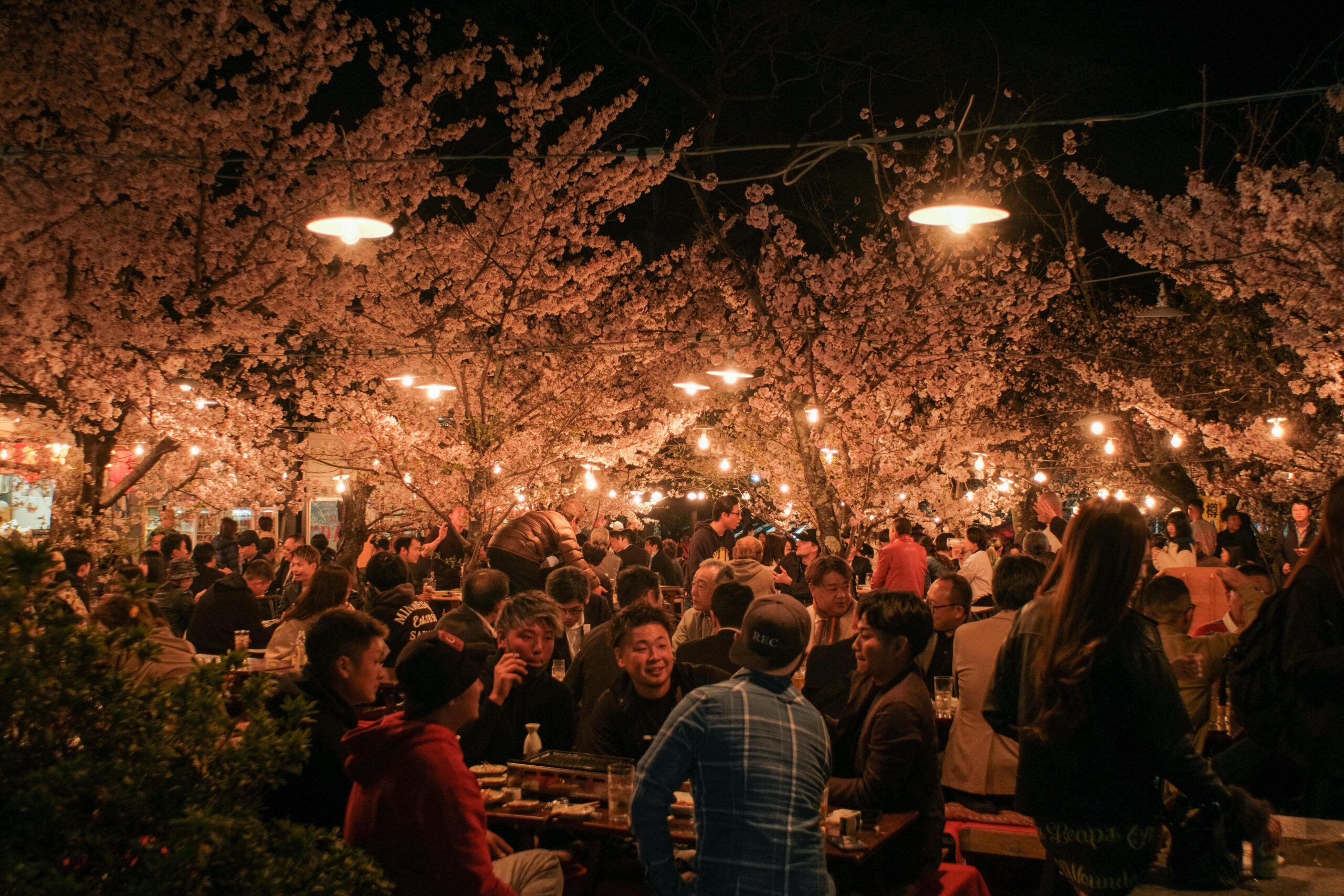
Every spring, Japan transforms into a pink wonderland. Cherry blossoms — called sakura (桜) — bloom for just about two weeks, and the Japanese celebrate with hanami (花見), which literally means “flower viewing.”
Parks fill with people, laughter, and bento boxes. It’s one of the most magical experiences you can have in Japan.
But hanami comes with unwritten rules. Miss them, and you might accidentally offend the locals — or simply miss out on the full experience.
Here are 10 things foreigners need to know before their first hanami.
1. Arrive Early to Reserve Your Spot 🕖
In popular parks like Ueno or Yoyogi, people start reserving spots from 6 or 7 AM — sometimes even earlier.
The tool of choice? A blue sheet (ブルーシート) — a simple blue tarp available at any convenience store or 100-yen shop for just a few hundred yen.
You lay it down, leave it there, and come back with your group later. Yes, this is completely normal and accepted.
Pro tip: Send the newest member of your group or the person with the most free time. Waiting for a spot is a rite of passage in Japan.
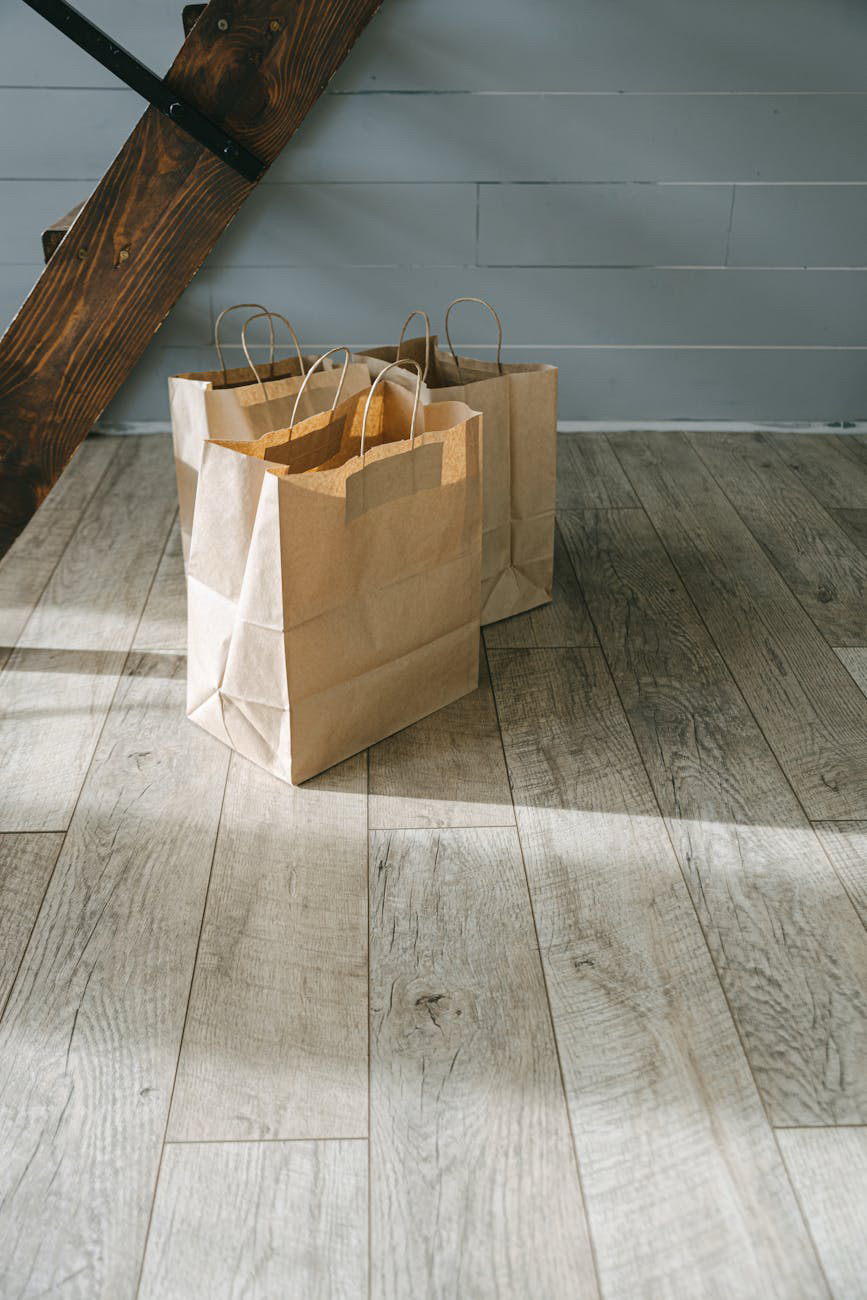
2. There Are No Trash Cans — Bring a Bag 🗑️
This surprises almost every foreigner.
Japanese parks have very few — sometimes zero — public trash cans. The rule is simple: you bring it, you take it home.
Bring extra plastic bags to sort your garbage (Japan recycles religiously: burnable, plastic, cans). Leaving trash behind is considered extremely disrespectful.
What to bring: A few large zip-lock bags or convenience store bags work perfectly.
3. Don’t Touch or Climb the Trees 🌸
It may be tempting to grab a branch for the perfect photo, but please don’t.
Cherry blossom trees are fragile and carefully maintained by local governments year-round. Shaking branches or climbing trees can damage them — and you’ll get some very stern looks from locals.
Instead, find a spot where petals naturally fall around you. That’s the real magic.
4. Alcohol Is Usually OK — But Read the Park Rules 🍶
One of the most enjoyable parts of hanami is drinking with friends under the blossoms. Beer, sake, wine — it’s all part of the tradition.
However, some parks have recently restricted or banned alcohol. Always check the rules of the specific park you’re visiting before you go.
Generally OK: Ueno Park, Shinjuku Gyoen (check current rules), Yoyogi Park Check first: Parks near schools or shrines may have restrictions
5. Keep the Noise at a Respectful Level 🎵
Hanami can get lively — music, singing, laughter. That’s all part of the fun.
But be mindful of neighbors. If the group next to you is having a quiet family picnic, keep your volume in check. Japan values reading the atmosphere (空気を読む, kuuki wo yomu).
A portable Bluetooth speaker at low volume is fine. A full DJ setup at 11PM? Probably not.
6. Daytime vs. Night Viewing — Two Completely Different Experiences 🌙
Yozakura (夜桜) means “night cherry blossoms,” and it’s breathtaking.
Many parks illuminate the trees after dark, creating a dreamlike atmosphere. The crowds are different too — more romantic, more mysterious.
Daytime hanami: Bright, social, family-friendly, great for photos Night hanami: Atmospheric, romantic, less crowded, lantern-lit
Try to experience both if you can.
7. Ask Before Photographing Strangers 📸
Japan has strict privacy norms. Taking photos of strangers — especially children — without permission is considered rude and can cause serious problems.
If someone accidentally appears in your shot, it’s polite to either delete the photo or blur their face if you post it online.
When in doubt, ask: “写真を撮ってもいいですか?” (Shashin wo totte mo ii desu ka?) — “May I take your photo?”
8. What to Bring to Hanami — The Essential Packing List 🎒
Here’s what every experienced hanami-goer brings:
Blue sheet / picnic mat — for your spot
Bento box or convenience store snacks — onigiri, sandwiches, karaage
Drinks — beer, sake, non-alcoholic options
Trash bags — multiple, for sorting
Wet wipes & hand sanitizer — limited facilities in parks
Warm layers — early April mornings can still be cold
Camera or phone — fully charged!
Cash — some park vendors don’t accept cards
🍷 Love wine? A light rosé or sparkling wine pairs beautifully with cherry blossoms. Explore a curated selection of imported wines delivered to Japan →スミレ色の白ワインをご存じですか?
Want to make the most of hanami season? This all-in-one Tokyo travel guide covers the best sakura spots, seasonal tips, and local etiquette — everything you need for the perfect cherry blossom experience! 👉 Tuttle Travel Pack: Your Guide to Tokyo’s Best Sights (Amazon)
summarize the estimated cherry blossom front in Japan for j 、This year, it’s said that areas like Kanto and Eastern Japan are expected to bloom slightly earlier than usual.
⭐️Tokyo and Kanto: expected to bloom around March 20th, 2026 this year!
⭐️成人式Congratulations on reaching adulthood, everyone.Happy Coming of Age Ceremony
Guiding my recommended trip to those who are planning a trip to Japan.
Wikipediaより拝借 振袖
Coming-of-age ceremonies are events in Japan that celebrate new adults, and are held on the second Monday of January each year, known as “Coming-of-Age Day.”
In 2025, Coming-of-Age Day was on January 13th.
Currently, due to the amendment of the Civil Code, the age of majority has been lowered to 18, but many local governments still hold coming-of-age ceremonies for those who are 20 years old.
In Japan, the legal drinking age is 20 years old. Although the legal adult age was lowered to 18 years old in April 2022, the drinking age remains at 20 years old.
Since the schedule and names may vary depending on the region, it is necessary to check the information from the local government for details.
The origin dates back to the Nara period with the “genpuku” and “mogi” ceremonies. Originally, it was a ritual performed by the upper class of nobles and warriors. The current form dates back to the “Seinen-sai” in 1946. The origin of the coming-of-age ceremony where new adults gather together is said to be the “Seinen-sai” held in Warabi City, Saitama Prefecture in 1946. It spread nationwide, and January 15, 1949 was established as “Coming of Age Day.”
And in 1948, it was officially established as a national holiday.
In the United States, the age of adulthood is 18, but there are “Sweet 16” parties held at 16, with dresses and parties at hotels.
In China, adulthood is at 18. A solemn ceremony is held at school. It seems to have a similar atmosphere to Japan’s graduation ceremonies, with the national anthem and pledges.
In Nepal, the Hindu ritual “Barthaman” is performed, and the age is determined through fortune-telling, so it varies from person to person.
In South Korea, there is “Coming of Age Day” celebrating the age of 19 on the third Monday of May, and it seems common to spend it with friends or lovers.
It varies by country, but on this day, you can see many lovely and beautiful young women in gorgeous furisode kimono when visiting places like large public halls in big towns. It’s a highly recommended spot to visit.
How about including this in your travel plans for next year?
“Fukubukuro” is a Japanese New Year’s tradition where various products are packed into a great value package.
The fukubukuro for 2025 includes a variety of genres such as food, goods, and fashion, with sales from department stores and popular brands attracting attention.
Recently, there has been an increase in fukubukuro where the contents are visible and collaboration products, making it easier for consumers to choose. It is customary for long lines to form at the first sale, and popular items can sell out in a matter of minutes.
The history of the fukubukuro dates back to the Edo period.
The original “Ebisu-bukuro” was sold by Echigoya (now Mitsukoshi), a kimono store in Nihonbashi, which filled bags with leftover winter fabrics.
Daimaru kimono stores also sold bags filled with scraps of fabric in the same way. In the Meiji period (1868-1912), with the development of department store culture, the fukubukuro became firmly established and became a symbol of the first sales of the New Year.
The name means “to stuff with good fortune.福袋🛍️
Modernization and the development of commerce were behind the popularization of fukubukuro during the Meiji period (1868-1912).As the department store culture spread, Tsuruya Drapery Store (today’s Matsuya) and Ito Drapery Store (today’s Matsuzakaya) began selling fukubukuro, which were widely advertised through newspaper ads.Fukubukuro also attracted attention as a sales strategy combining inventory clearance and good deals for consumers, and became established as a good luck charm for the New Year.
The fukubukuro boom of the Showa period began around 1966, when department stores aggressively introduced fukubukuro as part of their New Year’s first sales.With the high economic growth period in the background, consumer confidence increased, and fukubukuro were introduced in diverse genres such as fashion and home electronics, becoming an established tradition for the New Year’s holiday.
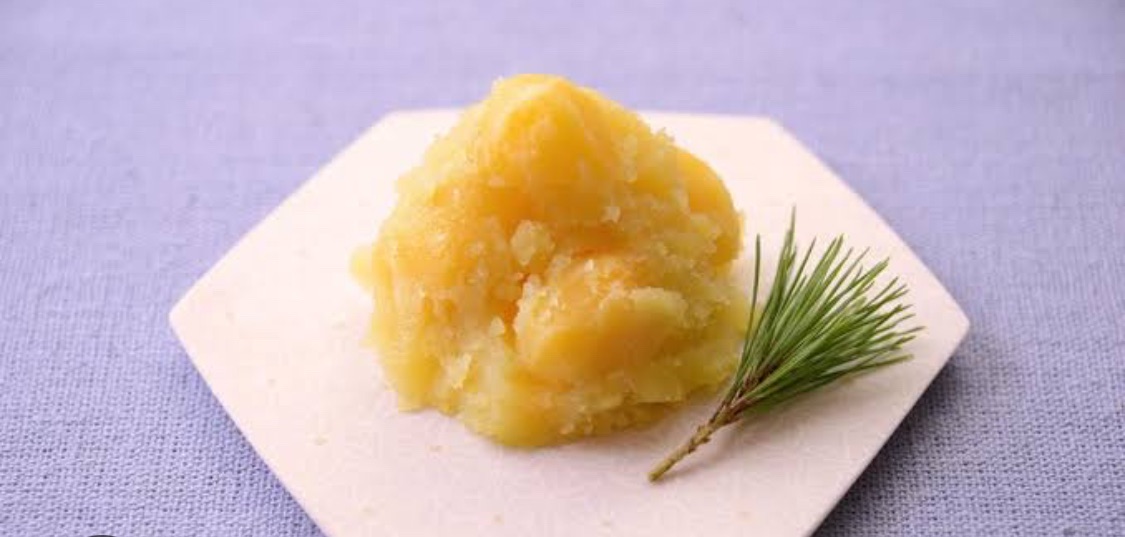
The origin of Kurikinton lies in the chestnut that the Japanese people have been eating since ancient times.
The history of chestnuts is very old, and it is recorded in the “Nihon Shoki” established in the Nara period (720) that the cultivation of chestnuts was encouraged by the Emperor.
At that time, chestnuts were mainly boiled or roasted, and were not considered as sweets, but later a process of “squeezing boiled chestnuts in a 茶巾Chakin was invented, giving rise to the prototype of the current 栗きんとんKurikinton.
The turning point in history came in the late Edo period. It was in Nakatsugawa (now Nakatsugawa City, Gifu Prefecture) that became the birthplace of Kurikinton.
At that time, Nakatsugawa, located along the 中山道 Nakasendo, one of the five major highways, was also one of Japan’s leading chestnut-producing areas. Taking advantage of this strength, many confectionery craftsmen in the area started making Kurikinton, and stores selling it were established one after another.
Karatsu City faces the Sea of Genkai in the northwestern part of Kyushu, and is a scenic place nurtured by the beautiful and rich nature represented by “Niji-no-matsubara,” which is a national special scenic beauty and one of the three great pine groves in Japan.
Takachiho is a place associated with Japanese mythology.
There are many shrines enshrining deities and places that are said to be the setting of mythology, such as Ama-no-Iwato, Ama-no-Kawara, and Kushifuru-no-Mine.
The stories described in the Kojiki and Nihonshoki are composed of three myths: the Takamagahara myth, the Izumo myth, and the Hyuga myth.
It takes less than an hour by train from Fukuoka to Itoshima City.About 100,000 population. It is a spacious coast, mountains, and rice fields in the western part of the peninsula.The simple Kyushu food is very delicious!
Itoshima City, Fukuoka Prefecture, ranked third in the world in “Bright lights, small city,” a ranking of livable small cities published by the British information magazine “MONOCLE” in 2021.
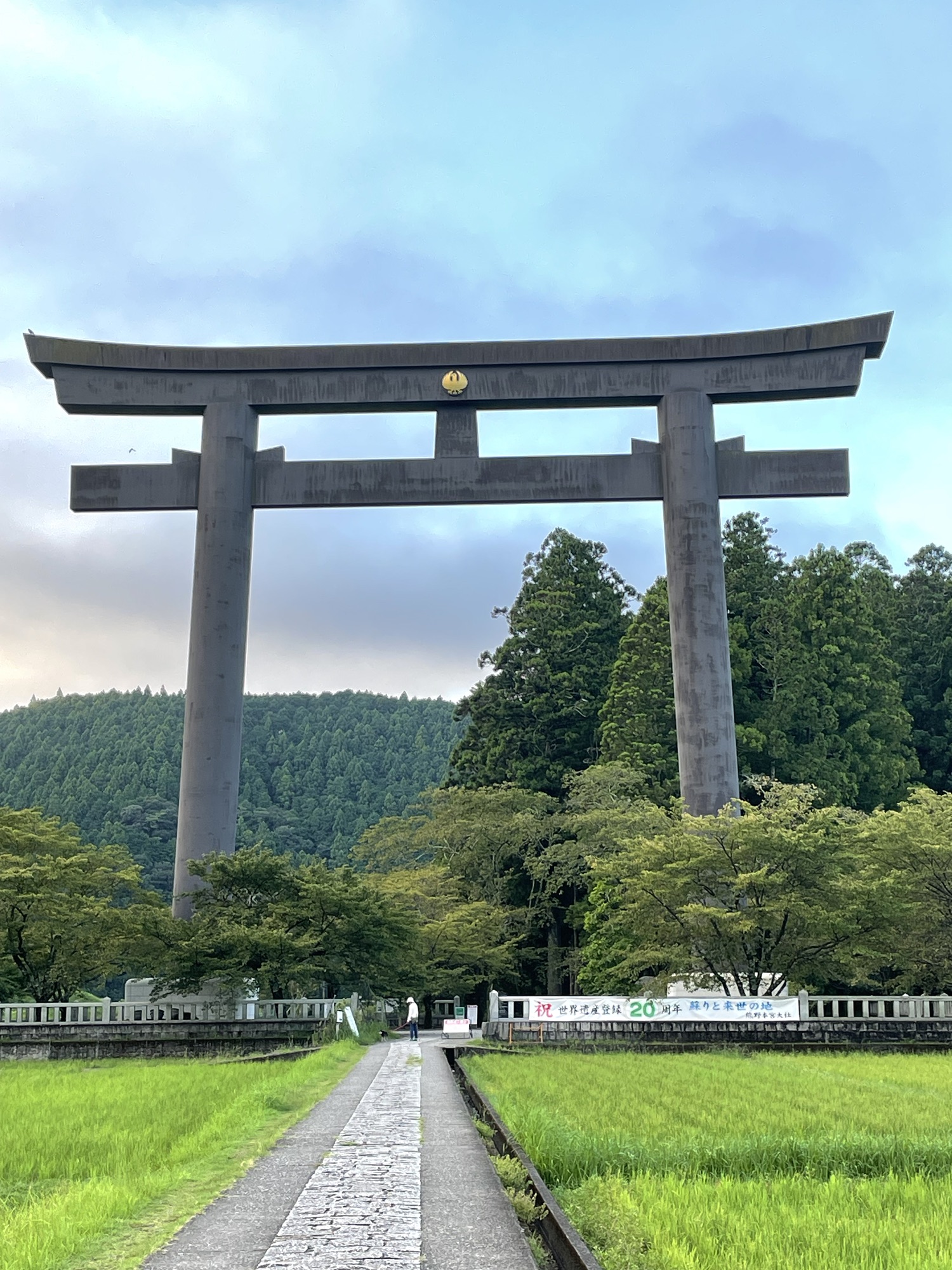
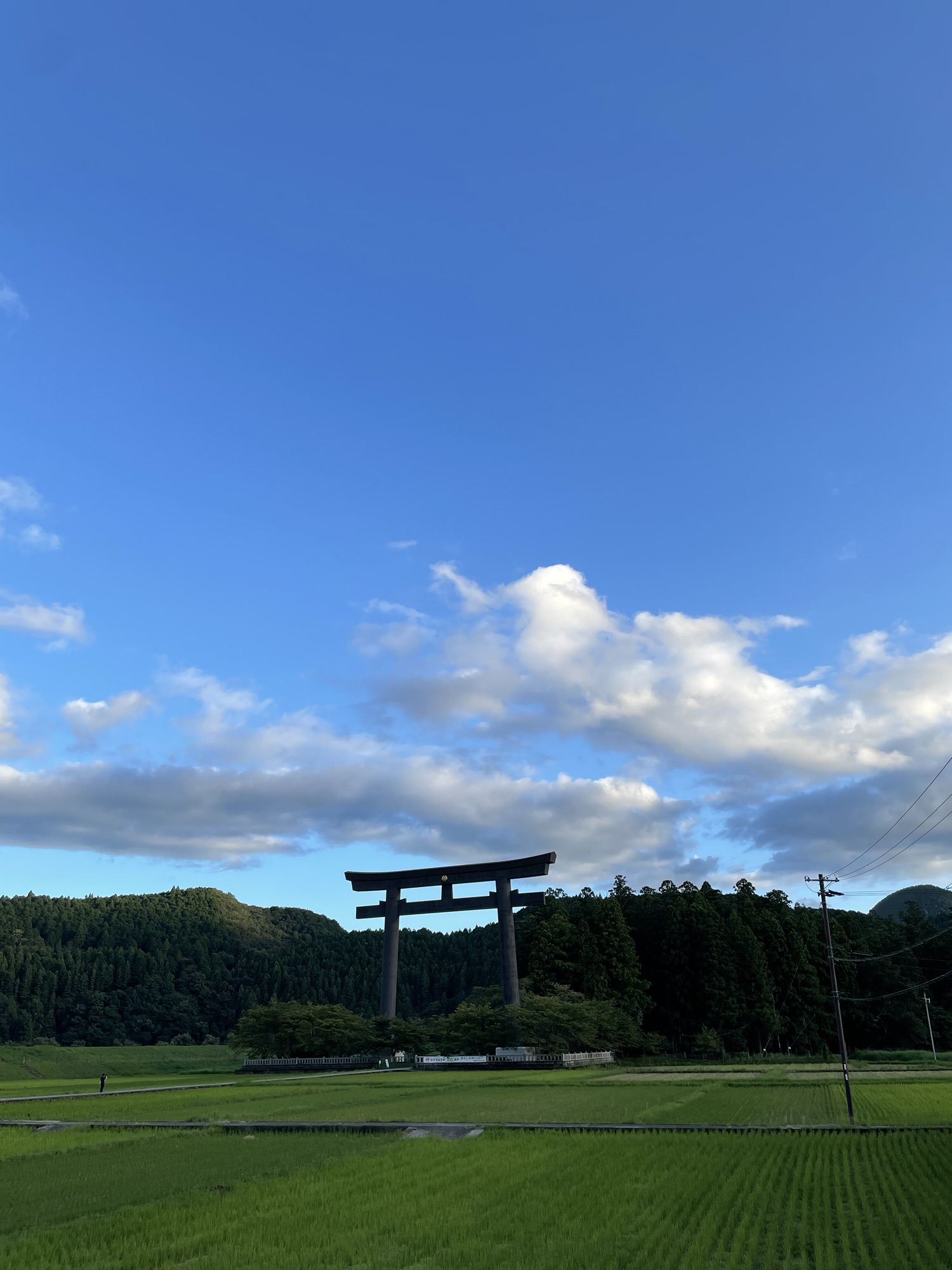
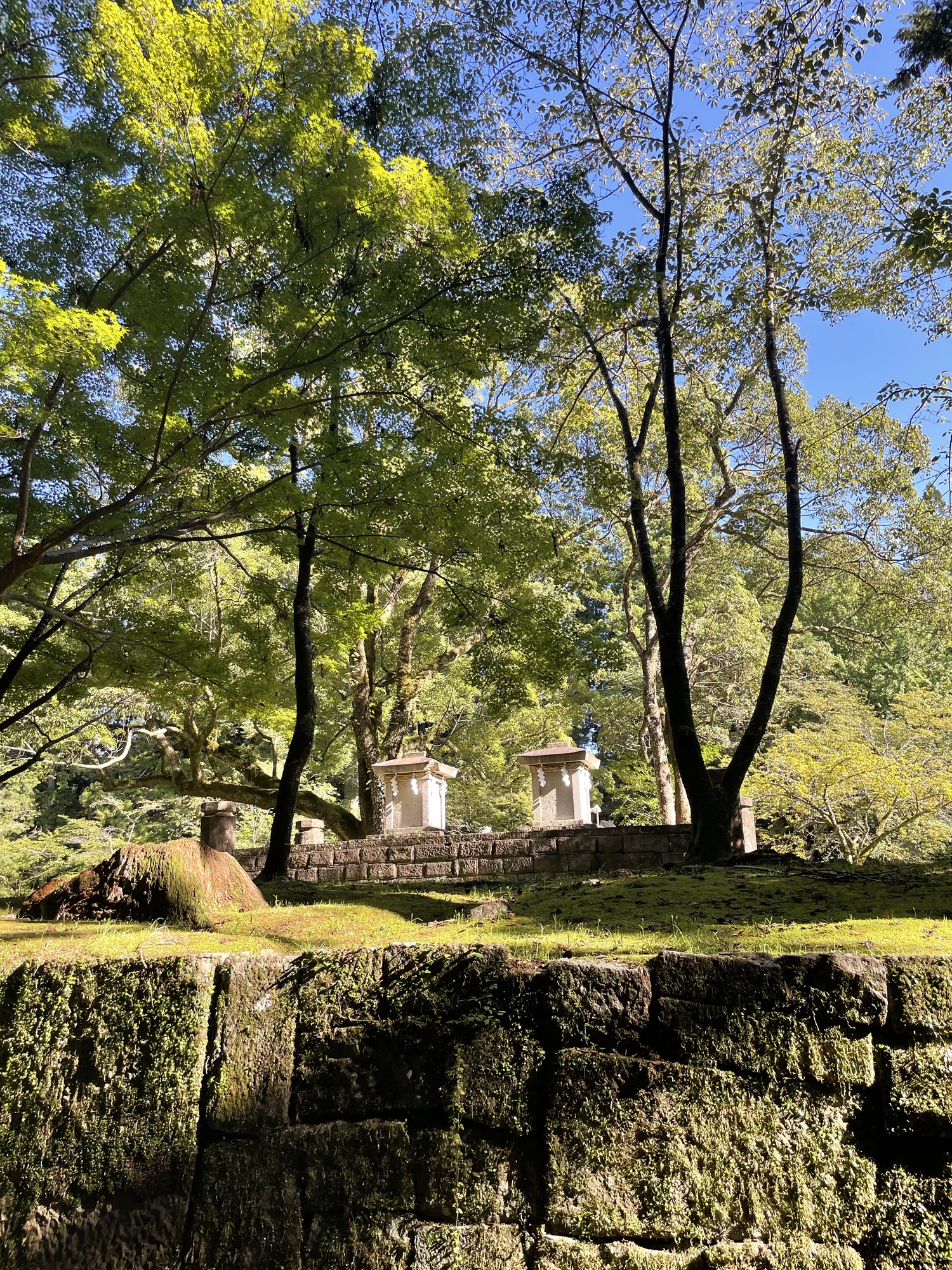
ここに行きたかった!Oyunohara is the former shrine site of Kumano Hongu Taisha in Tanabe City, Wakayama Prefecture, located at the confluence of the Kumano, Otonashi, and Iwata Rivers.
Founded in 33 B.C., ❗️
many of the shrine buildings were washed away in a flood in 1889 and moved to their current location.
Oyunohara is home to Japan’s tallest Otorii gate (34 meters high) and is also known as a cherry blossom viewing spot. Tourists can visit it from Kumano Hongu Taisha Shrine in about 10 minutes on foot