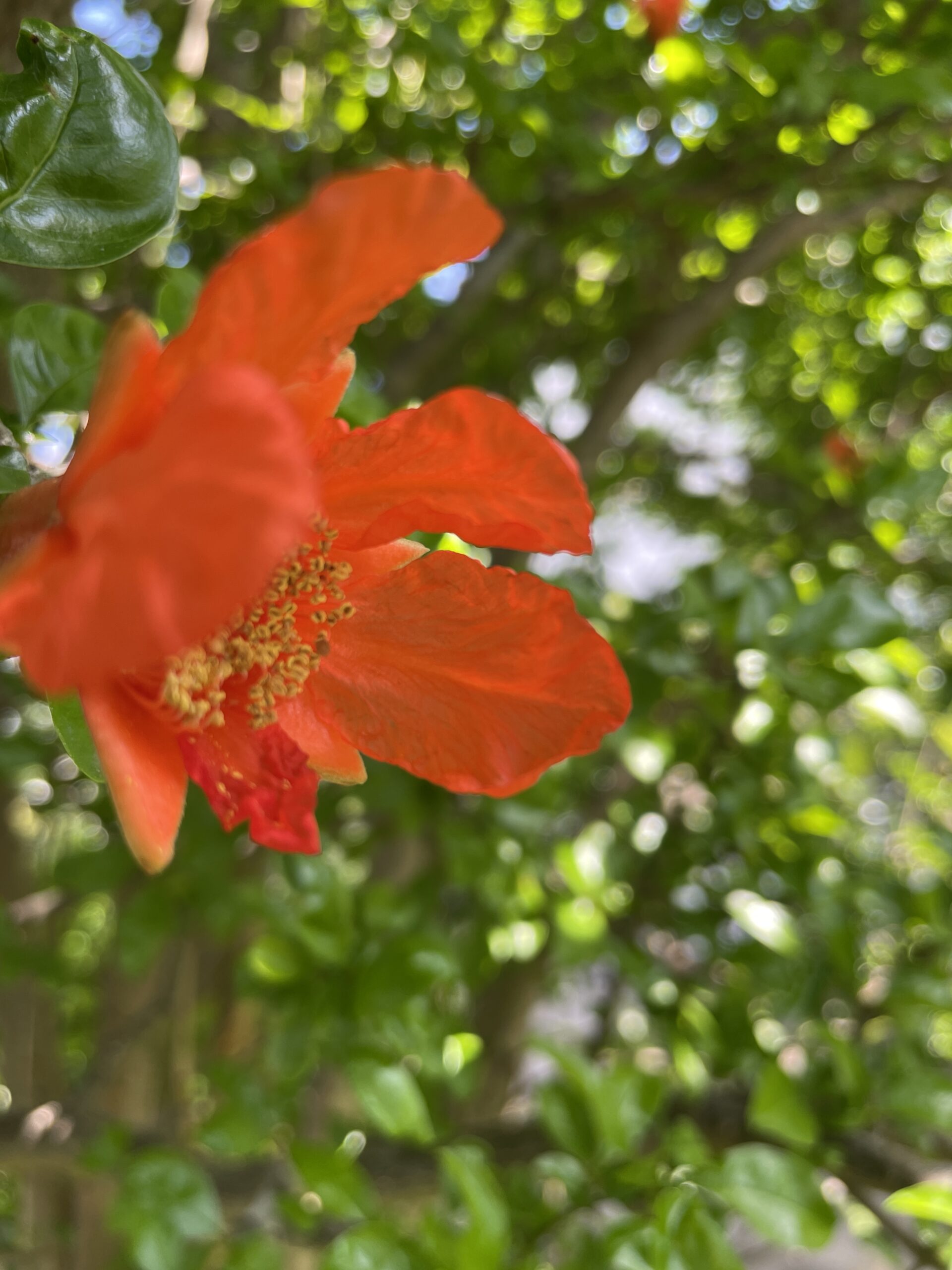
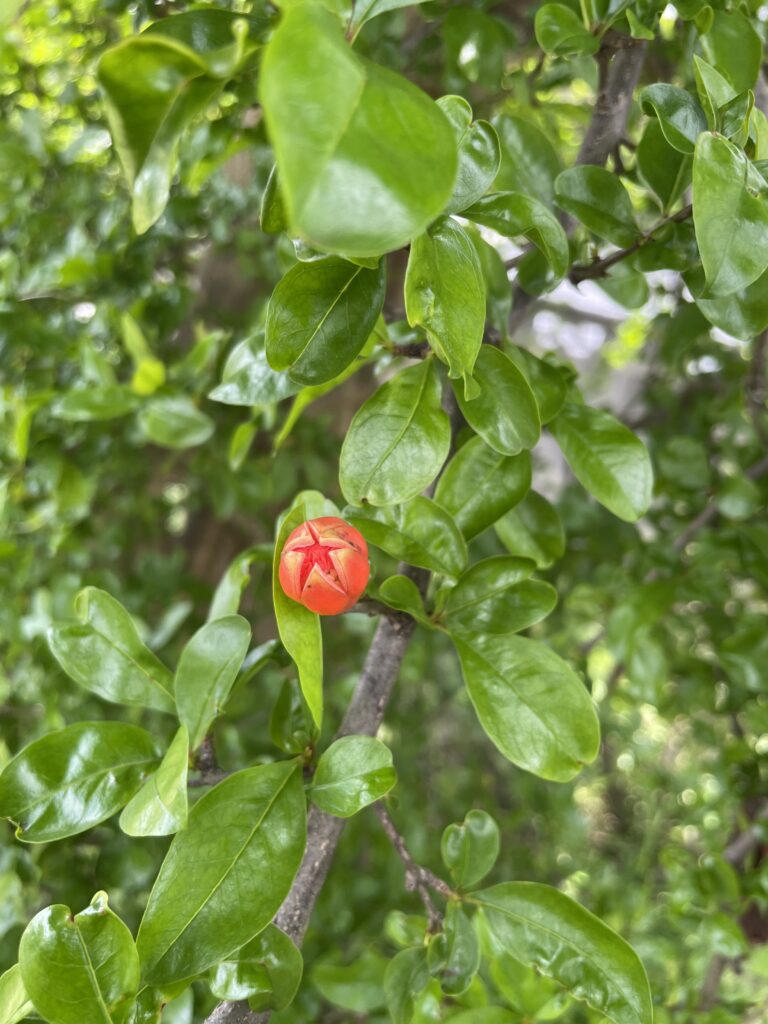
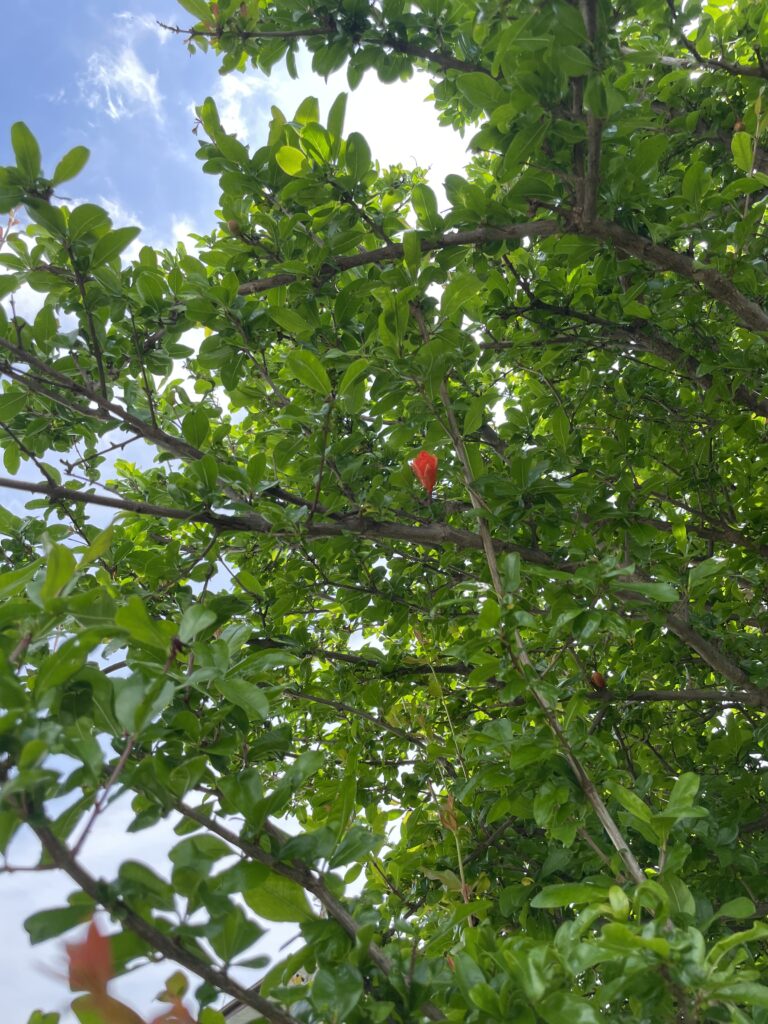
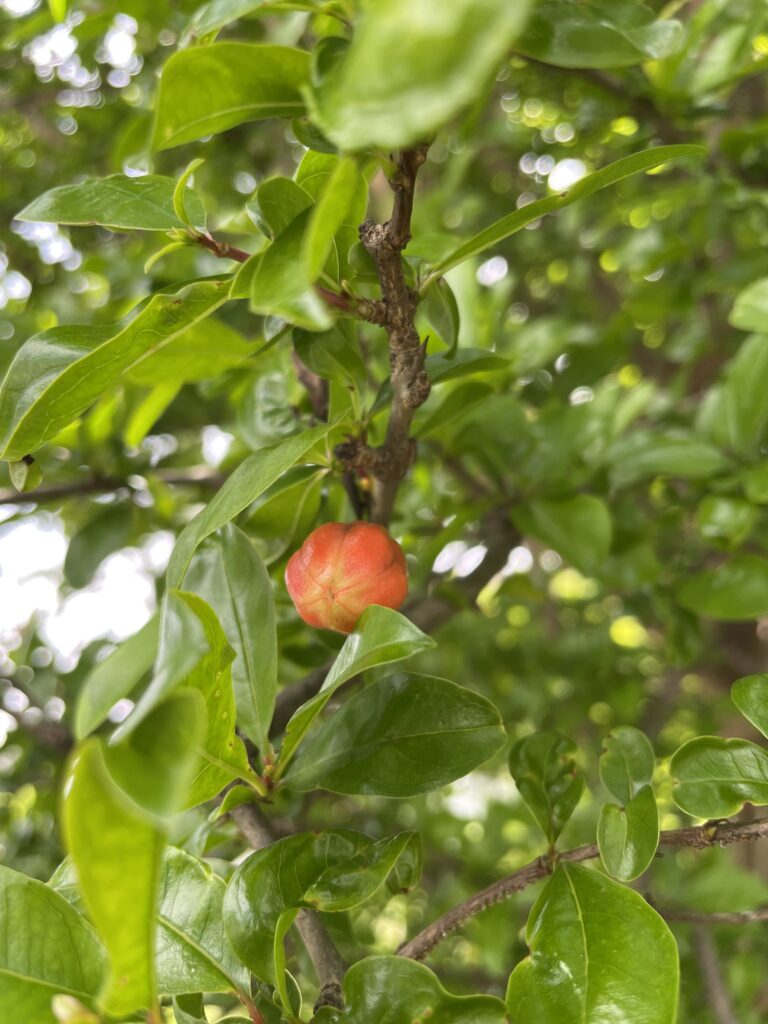
In my garden grows a pomegranate tree that has been here since before I was born — over 50 years old. Every autumn, it produces around 50 bright red fruits, filling the garden with color. This year, I’m finally going to make my own pomegranate vinegar!
The Buddhist Legend of Pomegranate
In Japan, pomegranate has a sacred connection to Buddhism. Kishimojin was a demon who devoured children — until the Buddha offered her a pomegranate as a substitute. She was transformed, becoming a protector of children. Her shrines in Tokyo’s Zoshigaya and Iriya are still visited by many today.
Beauty Secret from Korea to Japan
Pomegranate vinegar is hugely popular in Korea as a beauty drink — great for skin and anti-aging. The recipe is simple: equal parts pomegranate seeds, sugar, and vinegar. Mix and wait one month. I’ll be trying this myself this autumn!
Tokyo’s most rewarding shopping street for food lovers — and most tourists have never heard of it.
東京で一番面白いショッピングストリート。でも知らない観光客がほとんど。
How to Get There
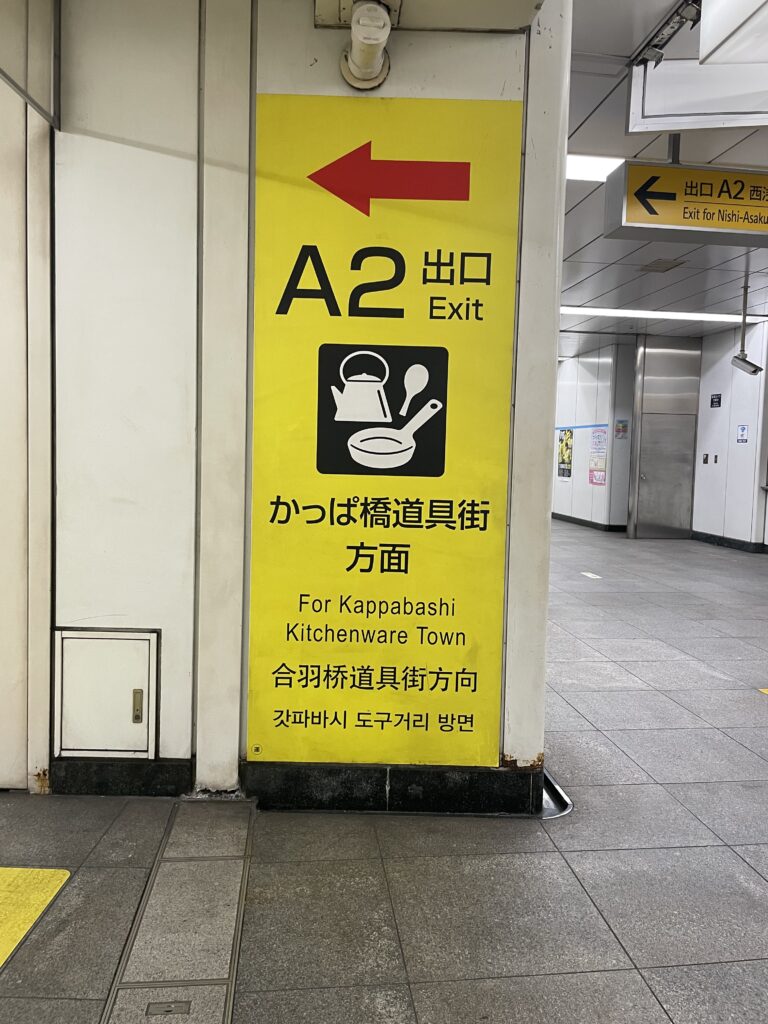
Take the Tsukuba Express to Asakusa Station, then follow the yellow signs to Exit A2. You’ll see “For Kappabashi Kitchenware Town” written in English, Japanese, Chinese, and Korean right on the floor.
From Exit A2, it’s a 7-minute walk. You can’t miss it.
つくばエクスプレス浅草駅A2出口を出て徒歩7分。床の黄色いサインが目印。
What Makes Kappabashi Special
Kappabashi — locals call it Kappa-bashi Dougu-gai — is a 170-meter street packed with over 170 shops selling professional-grade kitchen tools. Chefs from all over Japan shop here. And now, so can you.
Japanese knives are world-famous — and Kappabashi is where you buy them.
You’ll find everything from traditional shops with wooden displays of hand-crafted blades to sleek modern stores like ZAKU Knives, where the design feels more like a concept store than a kitchen shop.
Prices range from ¥4,100 for a basic knife to tens of thousands for professional chef’s knives. Labels are in both Japanese and English.
This is the detail most visitors miss — and the one they’ll remember forever.
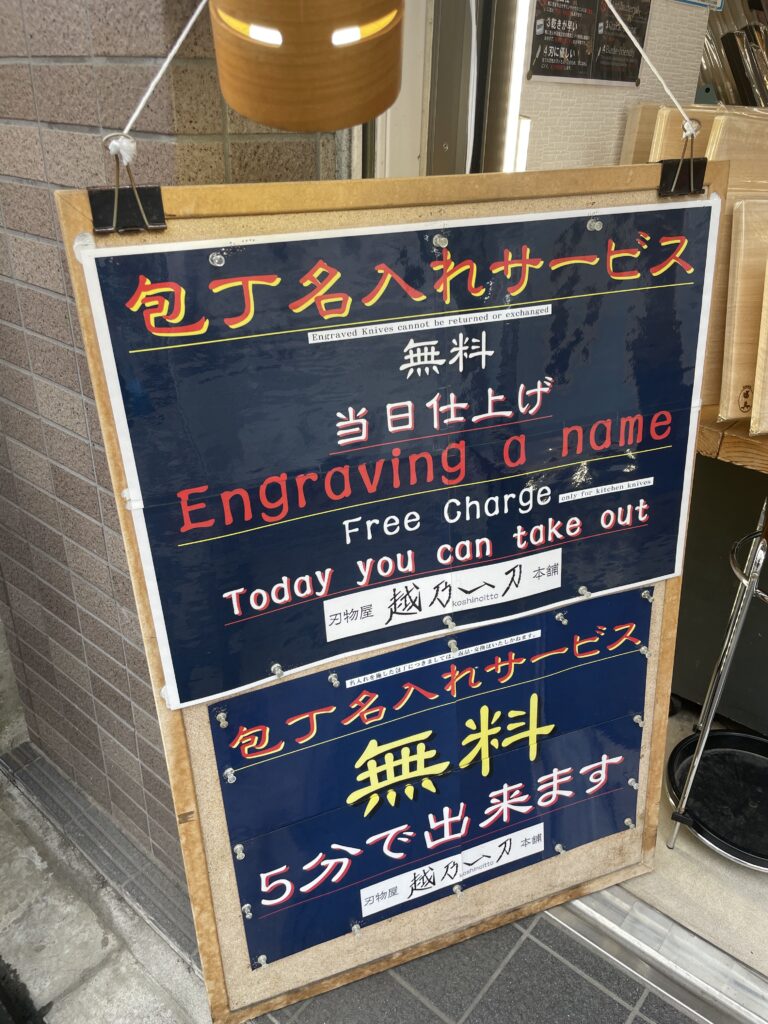
Several shops on Kappabashi offer free name engraving on kitchen knives, completed the same day. You can walk out with a personalized Japanese knife in your hands within minutes.
Look for the sign: “Engraving a name — Free Charge. Today you can take out.”
It makes the perfect gift. Or keep it for yourself.
Kappabashi isn’t only about knives. Look out for shops like Soil, which carries handmade ceramics from regions across Japan — Hasami-yaki from Nagasaki, Mashiko-yaki from Tochigi, Yachimunn from Okinawa.
Each piece tells a story of Japanese craftsmanship. Prices are reasonable, and the display cases are beautiful enough to photograph.
包丁だけじゃない。波佐見焼・益子焼・やちむんなど全国の焼き物も揃う。
Tips for Foreign Visitors
Knives in checked luggage only — you cannot bring them in carry-on bags on flights
Most shops are open 10am–5pm, closed on Sundays
Cash and IC cards are accepted at most shops; some accept credit cards
The street is uncrowded on weekday mornings — the best time to visit
Have you been to Kappabashi? What did you buy? Let me know in the comments.
📖 Learn More: The World of Japanese Knives
Fascinated by Japanese knives? This beautifully illustrated book dives deep into the craft, culture, and history behind Japan’s legendary blades — perfect reading before or after your Kappabashi visit! 👉 The Anatomy of a Japanese Knife (Amazon)