Kozo Murashita

  • Watashi no Heart wa Stop Motion (私のハートはストップモーション) by Tomoko Kuwae: A Spring Song for an Autumn Day

    Watashi no Heart wa Stop Motion (私のハートはストップモーション) by Tomoko Kuwae: A Spring Song for an Autumn Day

    Some songs carry the feeling of a season, even when you hear them in another one. For me, “Watashi no Heart wa Stop Motion” (私のハートはストップモーション) is a spring song, and it is a joy to listen to on a quiet autumn day. It was sung by Tomoko Kuwae (桑江知子) and released in January 1979.

    About the song

    This was Tomoko Kuwae’s debut single. It was used in a cosmetics commercial in the spring of 1979, reached No. 12 on the Oricon chart, and sold about 148,000 copies, which made it her biggest hit. That year it also won a Best New Artist award at the Japan Record Awards. The sound is bright and stylish, with a gentle city feeling, and in recent years it has been introduced as a song that city pop fans enjoy, too. It is a late-1970s pop song that feels like city pop.

    What I remember

    I did not know the English words “stop motion” back then. This song was the first time I heard them, and they felt fresh and exciting to me. What I loved most was the feeling of the song: a new love that comes in softly, together with spring. Even now, it makes me feel the warm air of that season.

    A spring song that also suits autumn

    This is a song of spring, when a new love comes in softly. Still, I like listening to it in autumn too, while the leaves slowly change color. Its light, hopeful feeling seems to warm a quiet autumn day. If you are looking for a gentle Showa-era song, I would love for you to try this one with a cup of tea.

    The song does not seem to be sold as a CD at the moment, but in Japan it can be bought as a digital download. If you visit Japan, it might be fun to look for it in a record shop. Finding an old record or CD in a small shop can be a lovely little treasure hunt, and it is a good song to look for.

    Is there a song that reminds you of a season, even when you hear it in a different one?

    Thank you for listening with me. I hope this song stays in your heart, too.

  • Purple Town (パープルタウン) by Junko Yagami: A Dream of a Faraway City

    Purple Town (パープルタウン) by Junko Yagami: A Dream of a Faraway City

    Ginza street at dusk with purple lights glowing on a building and city lights below a deep blue sky
    Purple lights in Ginza at dusk. Not New York, but my own little Purple Town. Photo: Segaijin

    Some songs make you dream of a faraway place before you even know where it is. For me, “Purple Town” by Junko Yagami is one of those songs. Released on July 21, 1980, its full title is “Purple Town (パープル タウン) ~You Oughta Know by Now~.”

    About the song

    “Purple Town” became a big hit, reaching No. 2 on the Oricon chart. That same year, it took Junko Yagami to the NHK Kohaku Uta Gassen, the famous New Year’s Eve music show, for the very first time. With its bright city sound, the song is now loved by city pop fans all over the world.

    Junko Yagami made her debut in 1978. Later, in 1987, she moved to Los Angeles and continued her music there, so her story also crosses the ocean, just like this song.

    What I remember

    When I was little, I did not know much about the song itself. But I remember the phrase “New York” so clearly. Hearing it made me dream about New York, a place that seemed so shining and far away. And I often wondered, “What is a Purple Town?” It sounded like a magical city to me.

    My favorite part was the moment she sings “I love…” in English. Her voice turns a little husky there, and I thought it was so cool. Even now, that part still gives me a small thrill. It stays in my heart as the sound of a big, bright city.

    Junko Yagami’s best-of CD, with “Purple Town” as track 2 (CDJapan, affiliate link):

    A city in a song

    If you love city pop, I hope you will listen to “Purple Town” and imagine the lights of a big city at night, just like I did as a child.

    Is there a city you once dreamed about because of a song?

  • Kimi no Asa (きみの朝) by Satoshi Kishida: A Song That Feels Like Morning Light

    Kimi no Asa (きみの朝) by Satoshi Kishida: A Song That Feels Like Morning Light

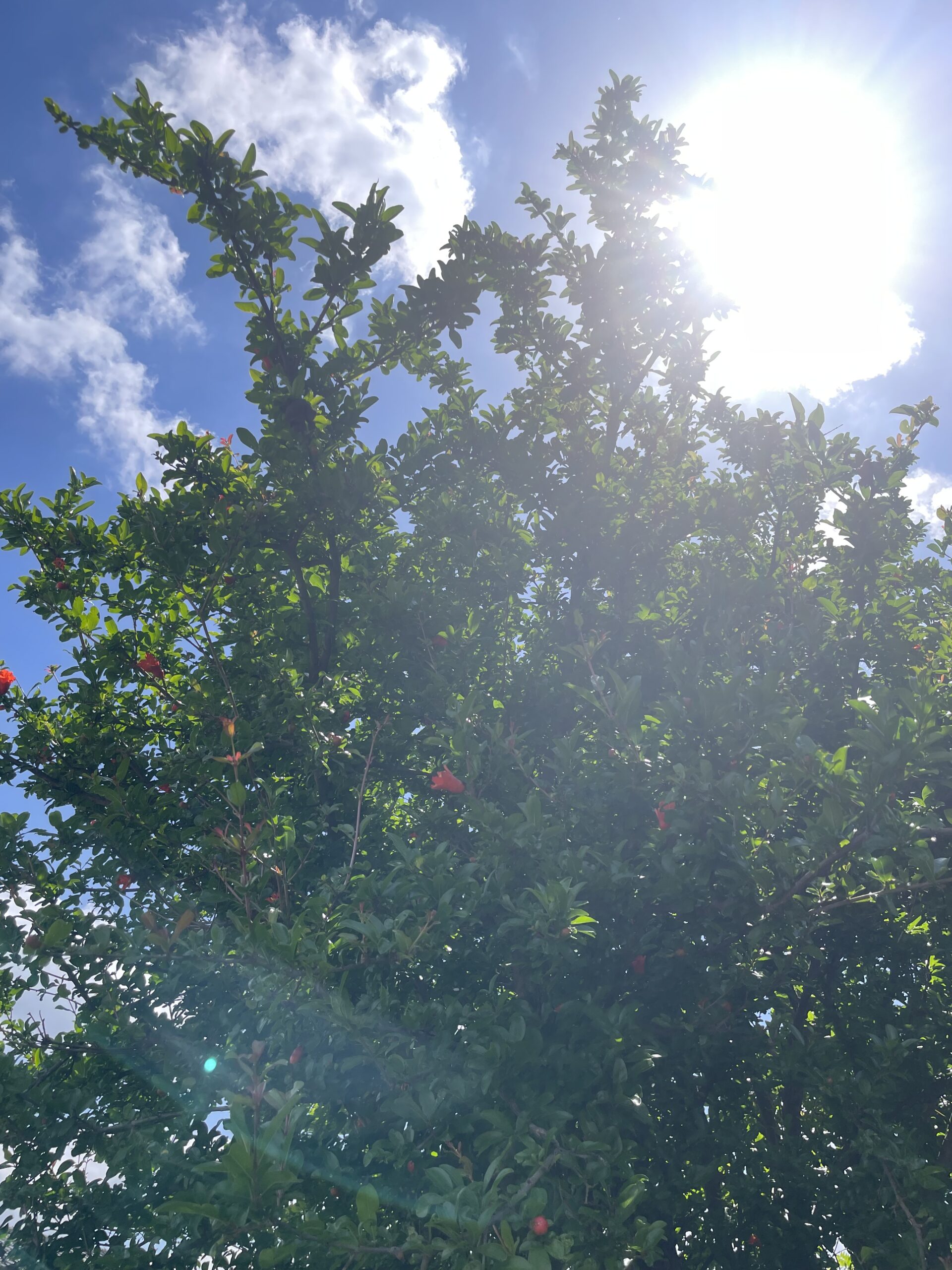
    Morning sunlight shining through a pomegranate tree with red flowers in a Japanese garden
    Morning light through the pomegranate tree in my garden. Photo: Segaijin

    Some songs feel like the first light of the day. For me, “Kimi no Asa” (きみの朝), which means “Your Morning,” is one of them. It was released in 1979 by Satoshi Kishida, a singer-songwriter who later changed the way his name is written to 岸田敏志.

    About the song

    “Kimi no Asa” belongs to the gentle “new music” sound of late-1970s Japan, when singer-songwriters brought soft melodies and personal stories to the charts. The song begins quietly and slowly opens up, like a window letting the morning in. Kishida’s voice is clear and warm, and the piano carries the whole song with a calm, steady heart.

    What I remember

    I was only a child when this song was on the radio and TV. What I loved most was the moment the music rises into the word “morning.” Even as a little girl, that part felt so comfortable to me. His voice was beautiful, and I think the piano was a big part of the magic, too.

    Looking back now, I realize the song carries a deeper story than I could understand back then. As a child, I simply felt the brightness of it. As an adult, I can hear the feelings hidden inside, and that makes the song even more precious to me. It stays in my heart like a quiet sunrise.

    Satoshi Kishida’s album “Morning” on CD (CDJapan, affiliate link):

    A song for a new day

    If you are looking for a Showa-era song to start your morning, I would love for you to try this one. Put it on with a cup of tea or coffee, and let the piano and that clear voice welcome the day with you.

    Is there a song that you like to listen to in the morning, one that makes a new day feel a little brighter?

  • Hatsukoi (初恋) by Kozo Murashita: The Quiet Love Song Behind a Hometown Landmark

    In February 1983, a soft-voiced singer-songwriter from Kumamoto released his fifth single. “Hatsukoi” (初恋), by Kozo Murashita, reached #3 on the Oricon chart and sold about 526,000 copies. It remains his biggest hit.

    The song

    Murashita wrote both the lyrics and the music. It is a gentle song about a first love that never quite came true. The sources I found disagree on its origin. One account says it grew from his middle school years in Minamata, when he liked a girl from the tennis club but never told her. Other accounts mention a producer’s advice and the schoolyard scenes in the lyrics. Probably it was a mix of memory and craft.

    The numbers

    It reached #3 on the Oricon chart and sold about 526,000 copies. More than 60 artists have covered it since.

    A song that became a street

    In 2013, a monument to the song was built in Minamata, his hometown, and a local shopping street was renamed “Hatsukoi-dori” (First Love Street). It is rare for one pop song to leave a mark on a real place like this.

    Minamata is also known around the world for Minamata disease, the mercury poisoning first identified there in 1956. A chemical company released mercury-containing waste into Minamata Bay for decades, and local people who ate the contaminated fish were harmed. The government officially recognized the cause in 1968. Since the 1990s, the town has worked to remember that history and to repair the bonds between its people. Today, a gentle love song stands in the same town, carved in stone, as a source of local pride.

    Why this song stays with me

    I always loved this song. What I like most is how simple it is. It says, without decoration, what anyone who has ever liked someone in their youth has felt. My favorite line is the one about someone running across the schoolyard after school (「放課後の校庭を走る君がいた」). I can see the whole scene.

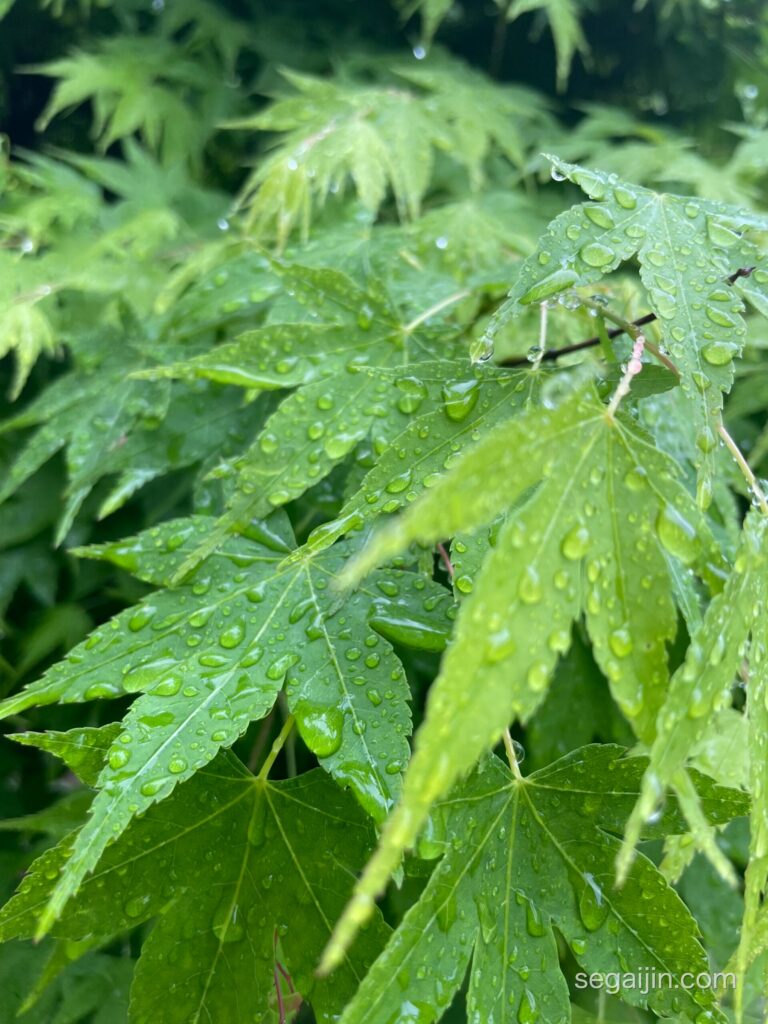
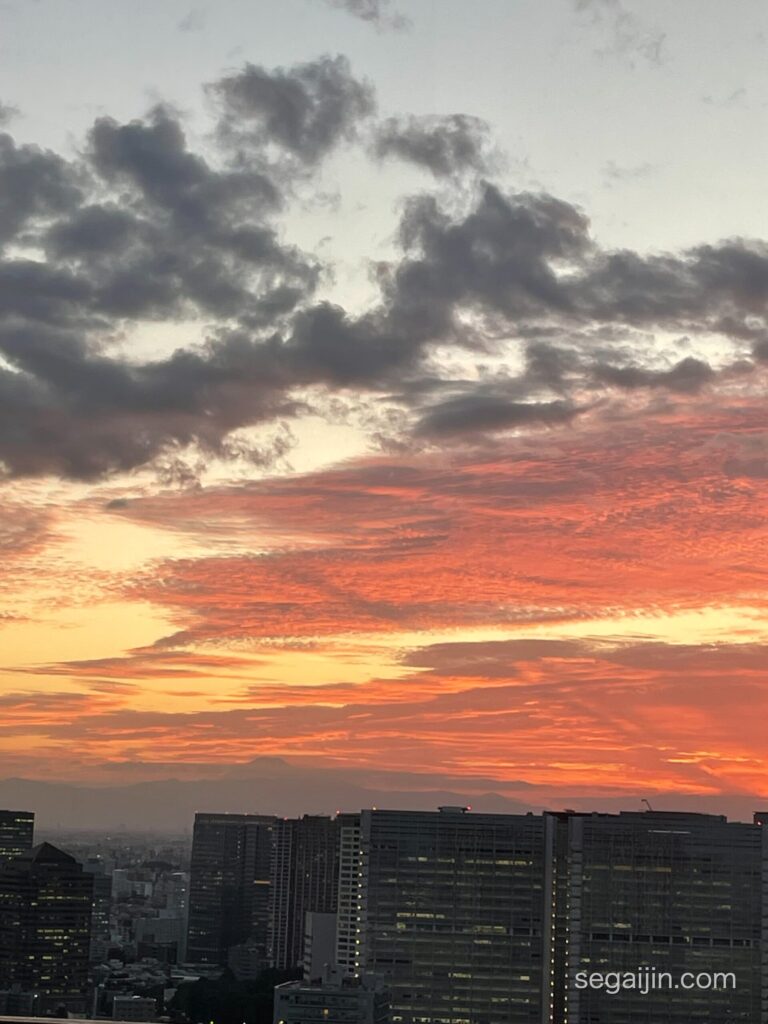
    One line always made me wonder: “the rainy season rain is green” (「五月雨は緑色」). I even had to look up the first word. “Samidare” means the long rain of the old calendar’s fifth month, which falls around June today. But what color is that, exactly? I never knew. From what I found, even the people around him did not fully explain it. Many readers take it to mean that the rain looks green because the new leaves are bright, or because falling in love changes how the whole world looks. Only while writing this did I notice that the second verse also begins with a color: the glow of the evening sky, apricot (「夕映えはあんず色」). That one I understood right away.

    Fresh green maple leaves covered in raindrops during the rainy season
    Fresh green leaves in the rain. Photo by the author. Photo: Segaijin
    An orange and apricot-colored sunset sky over city buildings, with Mount Fuji faintly visible in the distance
    The evening glow, apricot-colored. Photo by the author. Photo: Segaijin

    While searching for details for this article, I learned something I never knew: Murashita died in June 1999, at only 46. His voice sounds so warm and young that I never imagined he was gone. Fans now call the day of his death “Samidare-ki,” the Rainy Season Memorial, after the very first word of this song. Maybe that is why the song still feels so alive. It keeps his voice with us.

    I would love to visit Minamata on a future trip and walk down Hatsukoi-dori myself.

    Listen

    Kozo Murashita’s best-of CD (CDJapan, affiliate link):

    Another Kozo Murashita CD (CDJapan, affiliate link):

    Is there a song from the 80s that you would like me to cover next? Tell me in the comments.

    Part of my “one 80s J-pop song a day” series, for international fans who want to know the stories behind the music.