Showa Songs

One 80s J-pop (and Showa-era) song a day, for international readers.

  • Amaoto wa Chopin no Shirabe (雨音はショパンの調べ) by Asami Kobayashi: The Rainy-Day Song from Italy

    Many Japanese songs were born in Japan. This one was born in Italy, and then it found a new life in the rain.
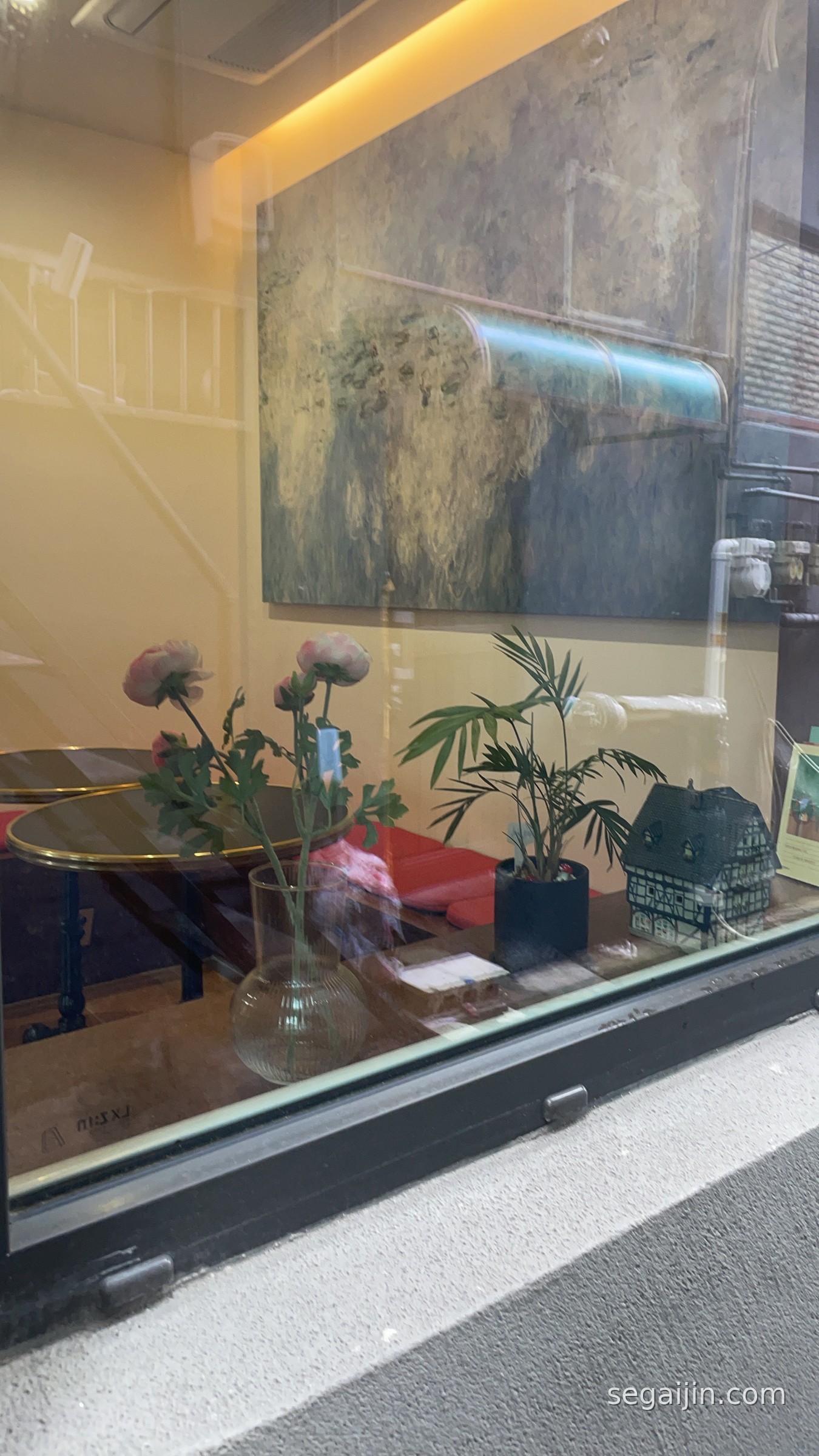
    A quiet cafe window on a rainy day, with flowers, a plant and a painting
    A quiet rainy afternoon, seen through a cafe window. Photo: Segaijin

    The song

    “Amaoto wa Chopin no Shirabe” (雨音はショパンの調べ, “The Sound of Rain Is Chopin’s Melody”) by Asami Kobayashi (小林麻美) was released on April 21, 1984. It reached number one on the Oricon weekly chart for three weeks in a row, and it was the 12th best-selling single of the year, with about 520,000 copies sold. It was Kobayashi’s first number-one hit.

    At that time, Kobayashi was known mostly as a model and for her lifestyle image in women’s fashion magazines. Her singing career had not been easy, but she had become more famous through a Shiseido commercial. This song changed everything for her.

    A song from Italy

    The original song is “I Like Chopin” by Gazebo, an Italian singer. It came out in 1983 and became a big hit in Europe. It is one of the most famous songs of “Italo disco,” a style of dance music that was popular in Italy in the early 1980s.

    For the Japanese version, the lyrics were newly written in Japanese by Yumi Matsutoya (松任谷由実, also known as Yuming), who was an old friend of Kobayashi. So the melody came from Italy, but the words and the feeling became very Japanese. Since then, many singers have recorded the song, and Yumi Matsutoya herself sang it on her 2003 album Yuming Compositions: FACES.

    Why I chose it

    I chose this song because it has been rainy lately. In September 2026, it really rained every single day. On days like this, I like to put on a song that fits the sound of the rain.

    What I remember

    When I was a child, I remember thinking, “What a grown-up title!” Chopin’s melody, and the sound of rain. Even as a child, I felt that a rainy day could be deep, and that sinking into the sound of the rain was somehow cool. I remember thinking, “This is a song for grown-ups.”

    Many years later, while looking into the song, I learned that Yumi Matsutoya (Yuming) had written the lyrics, and that the original was an Italian song. It was a lovely surprise to find out the story behind a song I had loved since I was a child.

    Listen

    Listen on Spotify:

    Also on YouTube Music: Amaoto wa Chopin no Shirabe (雨音はショパンの調べ) by Asami Kobayashi

    And here is the Italian original on YouTube Music:

    You can also find this song on this CD (CDJapan, affiliate link):

  • Nagai Yoru (長い夜) by Chiharu Matsuyama: The Quiet Song That Reached Number One

    Some songs are loud on purpose. This one is quiet, and it still reached number one.

    In the spring of 1981, Chiharu Matsuyama (松山千春) released a song about a long night. It went straight to the top of the charts, and many people still remember it today.

    Dusk over a calm sea, with the last orange light on the horizon and a railing in the foreground
    The last light of the day, just before the night begins. Photo: Segaijin

    The song

    “Nagai Yoru” (長い夜, “The Long Night”) by Chiharu Matsuyama was released on April 21, 1981, as his 10th single. It reached number one on the Oricon weekly chart, his first number one since “Kisetsu no Naka de” (季節の中で), and it was the fifth best-selling single of the year. He also appeared on the TV music show The Best Ten (ザ・ベストテン) for the second time with this song.

    The song that almost was not a single

    It is said that many people on the production staff did not think this song fit the image of Chiharu Matsuyama. There were strong opinions against releasing it as a single. But it became the biggest hit of his career. Sometimes the people who make a song do not know what the listeners are waiting for.

    Why I chose it

    I chose this song because autumn is here. In Japanese, we say aki no yonaga (秋の夜長), “the long autumn nights.” As the days get shorter and the air gets cooler, the nights feel long, and I think this is a very good song for that time of year.

    What I love about it

    What I love most is the guitar in the intro. It stays in my heart. I especially love the very beginning of the intro.

    Listen

    Listen on Spotify:

    A note: the version on Spotify is a recording from 1992 (on the album Kishoutenketsu II, 起承転結 II). The original single was released in 1981.

    Also on YouTube Music: Nagai Yoru (長い夜) by Chiharu Matsuyama

    A best-of CD by Chiharu Matsuyama (CDJapan, affiliate link):

    A compilation of male J-ballads with “Nagai Yoru” in its title (CDJapan, affiliate link):

  • Ii Hi Tabidachi (いい日旅立ち) by Momoe Yamaguchi: The Song Written to Make You Take a Train

    Some songs are written for a movie. Some are written for a drama. This one was written to make people take a train.

    In November 1978, Japanese National Railways launched a travel campaign called “Ii Hi Tabidachi” (いい日旅立ち, “A Good Day to Set Out on a Journey”). Its theme song, sung by Momoe Yamaguchi, became one of the most loved songs in Japan.

    Bright blue sky with white clouds, the feeling of a journey beginning
    Blue sky, ready to go. Photo: Segaijin

    The song

    “Ii Hi Tabidachi” (いい日旅立ち) was released on November 21, 1978, as Momoe Yamaguchi’s 24th single. Shinji Tanimura wrote both the lyrics and the music. It was the first time he wrote one of her singles. The song reached #3 on the Oricon chart. According to Oricon, it sold about 536,000 copies, and the record company reports a total of one million.

    Japanese National Railways, often called JNR, is the predecessor of today’s JR. The campaign was made to invite people to travel around Japan by train. The title is said to come from the first letters of two companies that supported the campaign, Nippon Travel Agency (日本旅行) and Hitachi (日立).

    A song for weddings and graduations

    Today, many people sing it at weddings and graduations. Interestingly, Tanimura himself said that the content is not really suited for celebrations. It is a song about leaving, after all. In 2007, it was chosen as one of “Japan’s 100 Songs” (日本の歌百選). Even now, it is played when special JR revival trains leave the station.

    Why I love Momoe’s version

    I like both versions: Momoe Yamaguchi’s, and the one by Shinji Tanimura, who wrote the song. But for me, hers is the one that sounds like travel.

    Her version opens with an introduction that makes you want to travel. Before she even starts singing, you can feel the train leaving the station. I also love her voice in the line where she sings about “somewhere in Japan.”

    What are “sheep clouds”?

    One word in the song stays with me: hitsujigumo (羊雲). It means “sheep clouds.” These are small, round, fluffy clouds that spread across the sky like a flock of sheep, and you often see them in autumn. I love the image of going out to look for them. It is such a gentle reason to take a trip.

    As a kid, I had no idea what hitsujigumo was. I remember looking it up. It is a cloud I still love today. Whenever I see hitsujigumo, I think of this song. And the best part is that the sky is the same in every country. Wherever you are in the world, you can look up and see the same clouds.

    Back then, and still today, I think the same thing every time I hear it: what a truly good song.

    Listen

    Compare the two versions on Spotify:

    Want to own the song? Momoe Yamaguchi’s complete singles collection at CDJapan includes “Ii Hi Tabidachi” (disc 2, track 6). This is an affiliate link. If you buy through it, I may earn a small commission at no extra cost to you.

    And a book about her (CDJapan, affiliate link):

    And a concert video (CDJapan, affiliate link):

    Which one makes you want to travel? Tell me in the comments. And if you have ever looked up at the sky in Japan and seen hitsujigumo, I would love to hear about it.

    This is part of my series: one Showa-era song a day, with a focus on the 80s.

  • Daitokai (大都会) by Crystal King: The Song That Starts at the Top

    Most songs start slowly. This one doesn’t. It starts at the top.

    Skyscrapers lit up at night, seen from the street looking up
    My photo: looking up at the big city at night. Photo: Segaijin

    In 1979, a band from Kyushu released a debut single that opens with a soaring high note, with no intro at all. It sold more than 1.5 million copies.

    The song

    “Daitokai” (大都会, “The Big City”) by Crystal King (クリスタルキング) was released on November 21, 1979, as the band’s debut single. It won the grand prize at the 18th Yamaha Popular Song Contest (known in Japan as “Popcon”), a famous contest that launched many Japanese artists. It became the third best-selling single of 1980 in Japan.

    The idea of starting at the top

    Normally, a song builds up to its big moment. “Daitokai” does the opposite. It is said that vocalist Masayuki Tanaka (田中昌之) wanted to surprise listeners right away, with the highest note at the very beginning.

    As a kid, I thought the name alone was bold: Crystal King. It sounded so confident. And the song matched the name. It opened at the highest note, with no warm-up at all.

    Why I fell for this song

    I felt refreshed every time I heard that first note. It is bold, and it does not hesitate. In Japanese, we might call this isagiyoi (潔い), which means clean, brave, and with no hesitation. It was very powerful for me back then.

    And then there’s the harmony. Two vocalists, Masayuki Tanaka and Monsieur Yoshisaki, blend their voices so tightly that it sounds like one big voice. To me, it is still the best harmony I have ever heard, even today. Please listen for yourself.

    Listen

    Many people know Crystal King for another song: “Ai o Torimodose!!” (愛をとりもどせ!!), the first opening theme of the anime Fist of the North Star (北斗の拳) in 1984. I remember it very well. It was hugely popular. I only realized recently that it was the same band, and it made me happy to connect the two songs after all these years.

    Listen on Spotify:

    Crystal King’s best-of CD (CDJapan, affiliate link):

    And a single with “Ai wo Torimodoze!!” (Remix) (CDJapan, affiliate link):

    Do you know “Daitokai”? Or did you first meet Crystal King through the anime? Tell me in the comments.

    This is part of my series: one Showa-era song a day, with a focus on the 80s.

  • Machibuse (まちぶせ) by Hitomi Ishikawa: The Song That Was Written for Someone Else

    In April 1981, singer Hitomi Ishikawa released her 11th single, “Machibuse” (まちぶせ). It reached #6 on the Oricon chart, stayed on it for 12 weeks, and reportedly sold over 700,000 copies. At the end of that year, it took her to the Kohaku Uta Gassen for the first time.

    A café window with a large stuffed rabbit seated at a table for two
    My photo: a street corner at dusk, and a café where two seem to be laughing together. Photo: Segaijin

    The song

    Yumi Arai (now known as Yumi Matsutoya, or “Yuming”) wrote both the lyrics and the music. The title means “lying in wait.” A girl waits for the boy she likes and hopes he will notice her.

    A song that began with someone else

    The first singer was not Ishikawa. Seiko Miki recorded it in 1976 as her debut single. It reached only #47, and she later left the music world after vocal problems. Five years later, the song found its audience through another voice.

    The numbers

    Ishikawa’s version reached #6 on the Oricon chart and #3 on TBS’s music show The Best Ten. It took more than two months to climb the charts, a slow burn rather than an instant hit.

    Ishikawa’s turning point

    By her third year as a singer, Ishikawa still had no big hit. One article says she treated this as her last single. She had even sung it at her audition before her debut. The song extended her career.

    Yuming sings it herself

    In 1996, Yumi Matsutoya recorded her own version under the name Yumi Arai. It reached #5 and sold about 372,000 copies. Singers such as Hideaki Tokunaga, JUJU, Keisuke Kuwata and Mone Kamishiraishi have covered it too.

    Why this song stays with me

    Listening again now, I am struck by how much of a girl’s heart is packed into this song. Yuming writes with such sharp eyes.

    This is how I read it. A girl notices that another girl has suddenly become beautiful. She is jealous, but she pretends not to care and walks right into their conversation on purpose. Then she sits across the table and gives him hot looks. It is not just nervousness. It is a shrewd plan to win him. I imagine sparks flying between the two girls, all hidden behind polite smiles. Yuming tells the whole drama without explaining a thing.

    If you want to understand Japanese girls, or learn to read between the lines of what they do, this song is full of hints. The title may sound a little scary today, but I hear it as a funny, fierce picture of a girl who has decided to win him.

    Listen

    While researching this article, I listened to the versions one after another, and I made a fun discovery. When the singer changes, the scene I imagine changes too. The same girl, the same jealousy, but each voice gives her a different face. I enjoyed every minute of digging into this song. Over 45 years, this song has been sung by both women and men. The scene changes with each voice, but the feeling stays the same. Compare the versions on Spotify:

    Also on YouTube Music: Hitomi Ishikawa, “Machibuse” (the 2025 version)

    Want the CD? Hitomi Ishikawa’s “Machibuse” is on this CD (CDJapan, affiliate link):

    Is there a song from the 80s that you would like me to cover next? Tell me in the comments.

    Part of my “one 80s J-pop song a day” series, for international fans who want to know the stories behind the music.

  • Hatsukoi (初恋) by Kozo Murashita: The Quiet Love Song Behind a Hometown Landmark

    In February 1983, a soft-voiced singer-songwriter from Kumamoto released his fifth single. “Hatsukoi” (初恋), by Kozo Murashita, reached #3 on the Oricon chart and sold about 526,000 copies. It remains his biggest hit.

    The song

    Murashita wrote both the lyrics and the music. It is a gentle song about a first love that never quite came true. The sources I found disagree on its origin. One account says it grew from his middle school years in Minamata, when he liked a girl from the tennis club but never told her. Other accounts mention a producer’s advice and the schoolyard scenes in the lyrics. Probably it was a mix of memory and craft.

    The numbers

    It reached #3 on the Oricon chart and sold about 526,000 copies. More than 60 artists have covered it since.

    A song that became a street

    In 2013, a monument to the song was built in Minamata, his hometown, and a local shopping street was renamed “Hatsukoi-dori” (First Love Street). It is rare for one pop song to leave a mark on a real place like this.

    Minamata is also known around the world for Minamata disease, the mercury poisoning first identified there in 1956. A chemical company released mercury-containing waste into Minamata Bay for decades, and local people who ate the contaminated fish were harmed. The government officially recognized the cause in 1968. Since the 1990s, the town has worked to remember that history and to repair the bonds between its people. Today, a gentle love song stands in the same town, carved in stone, as a source of local pride.

    Why this song stays with me

    I always loved this song. What I like most is how simple it is. It says, without decoration, what anyone who has ever liked someone in their youth has felt. My favorite line is the one about someone running across the schoolyard after school (「放課後の校庭を走る君がいた」). I can see the whole scene.

    One line always made me wonder: “the rainy season rain is green” (「五月雨は緑色」). I even had to look up the first word. “Samidare” means the long rain of the old calendar’s fifth month, which falls around June today. But what color is that, exactly? I never knew. From what I found, even the people around him did not fully explain it. Many readers take it to mean that the rain looks green because the new leaves are bright, or because falling in love changes how the whole world looks. Only while writing this did I notice that the second verse also begins with a color: the glow of the evening sky, apricot (「夕映えはあんず色」). That one I understood right away.

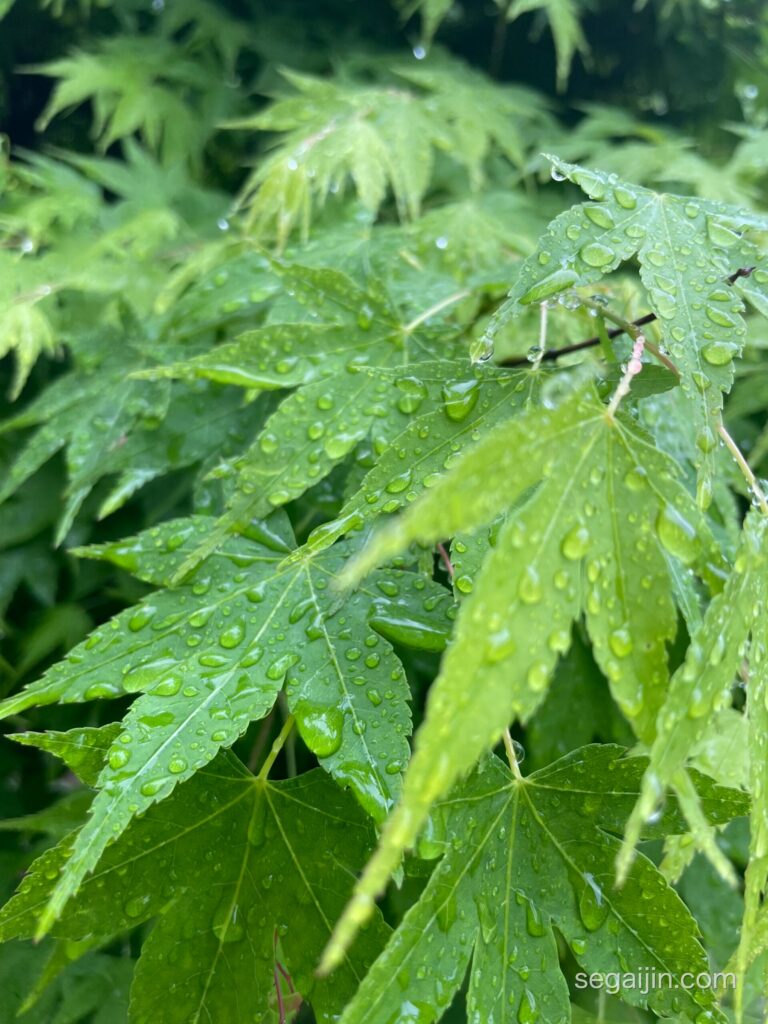
    Fresh green maple leaves covered in raindrops during the rainy season
    Fresh green leaves in the rain. Photo by the author. Photo: Segaijin
    An orange and apricot-colored sunset sky over city buildings, with Mount Fuji faintly visible in the distance
    The evening glow, apricot-colored. Photo by the author. Photo: Segaijin

    While searching for details for this article, I learned something I never knew: Murashita died in June 1999, at only 46. His voice sounds so warm and young that I never imagined he was gone. Fans now call the day of his death “Samidare-ki,” the Rainy Season Memorial, after the very first word of this song. Maybe that is why the song still feels so alive. It keeps his voice with us.

    I would love to visit Minamata on a future trip and walk down Hatsukoi-dori myself.

    Listen

    Kozo Murashita’s best-of CD (CDJapan, affiliate link):

    Another Kozo Murashita CD (CDJapan, affiliate link):

    Is there a song from the 80s that you would like me to cover next? Tell me in the comments.

    Part of my “one 80s J-pop song a day” series, for international fans who want to know the stories behind the music.

  • Banri no Kawa (万里の河) by CHAGE and ASKA: The 1980 Hit That Defined Their Early Sound

    In September 1980, a young duo from Fukuoka released their third single. “Banri no Kawa” (万里の河), by CHAGE and ASKA (then known as Chage & Aska), became their first Top 10 hit in Japan.

    The song

    ASKA wrote both the lyrics and the music. He aimed for a commercial hit, and built the melody on Chinese-style phrases and an “oriental” vocal line. The lyrics follow a woman waiting for a lover who has left, using the endless flow of a river as a metaphor for longing.

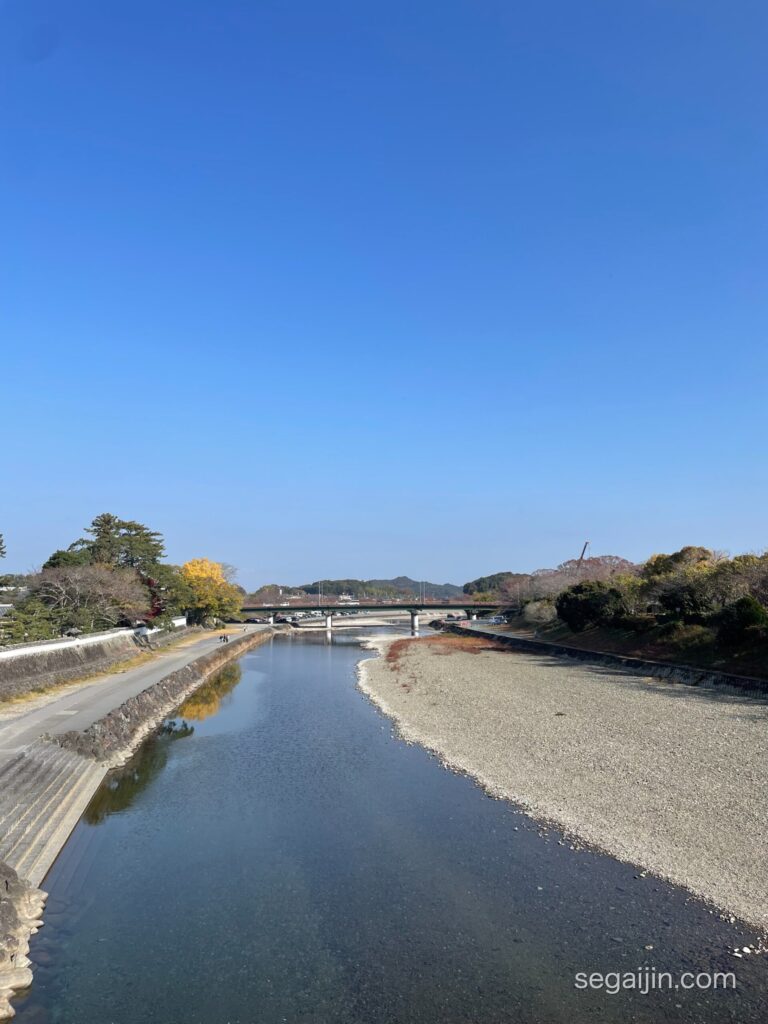
    A wide river under a clear blue sky, with a bridge in the distance and autumn trees along the bank
    The Isuzu River near Ise Jingu. Photo by the author. Photo: Segaijin

    The numbers

    It reached #6 on the weekly Oricon chart and sold about 537,000 copies.

    A TV moment

    The duo performed it on TBS’s music show The Best Ten from a Tohoku Shinkansen station, before the line officially opened.

    The trap of success

    The hit also boxed ASKA in. He felt pressure to keep writing similar songs, until the duo changed labels and released “Morning Moon,” which marked their creative release.

    Why this song stays with me

    I was still a child when I first heard this song, and the title alone stopped me. “Banri” means “ten thousand miles,” and those words made China feel unimaginably vast to me. I remember being deeply moved by that sense of scale.

    I only realized while writing this article that I had been mixing up this song with the Great Wall, “Banri no Chojo” (万里の長城). The song is about a river, “Banri no Kawa,” but the two titles had melted into one in my childhood memory.

    The Great Wall of China winding over misty mountain ridges, with a stone staircase in the foreground
    The Great Wall, which I mixed up with the song’s title. Photo by Ajmal MK on Unsplash Photo: Segaijin

    A pop song taught a child how big a country could be, even if she got the name wrong. Decades later, I still feel that quiet wonder whenever I hear it.

    It is wonderful how a single song can bring a whole era back to us.

    Listen

    Listen to “Banri no Kawa” on YouTube Music

    Part of my “one 80s J-pop song a day” series, for international fans who want to know the stories behind the music.

    A concert video by CHAGE and ASKA (CDJapan, affiliate link):