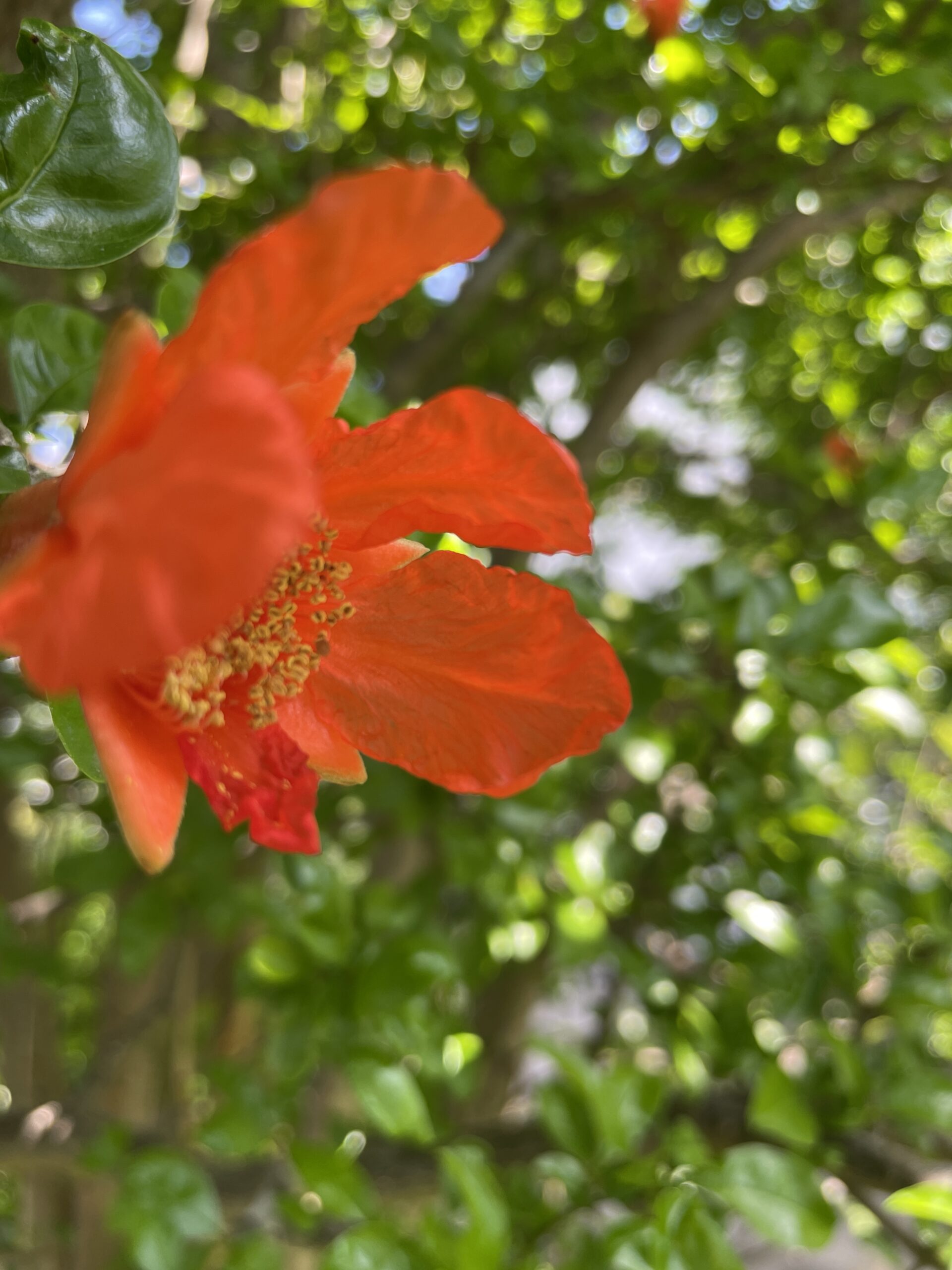
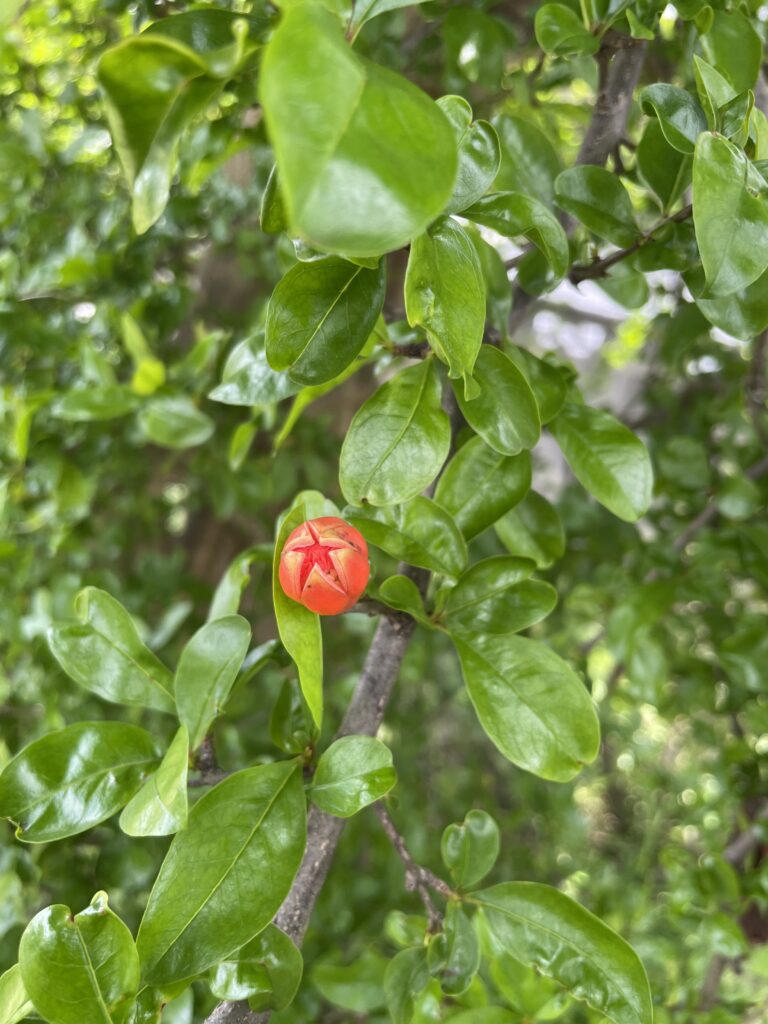
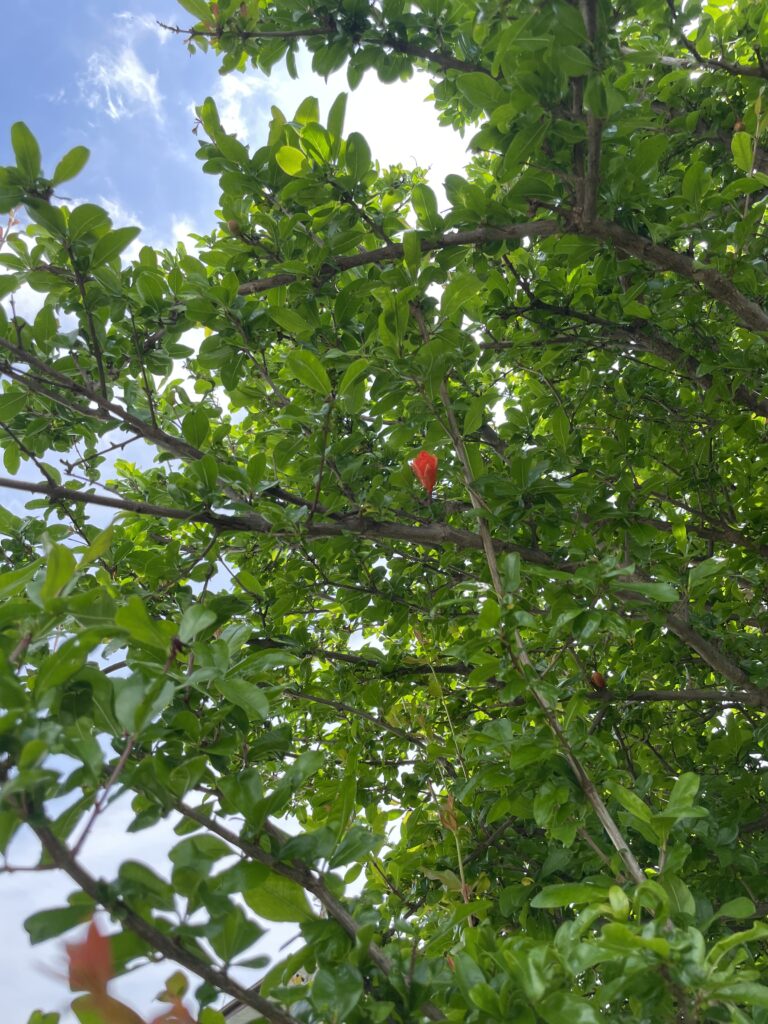
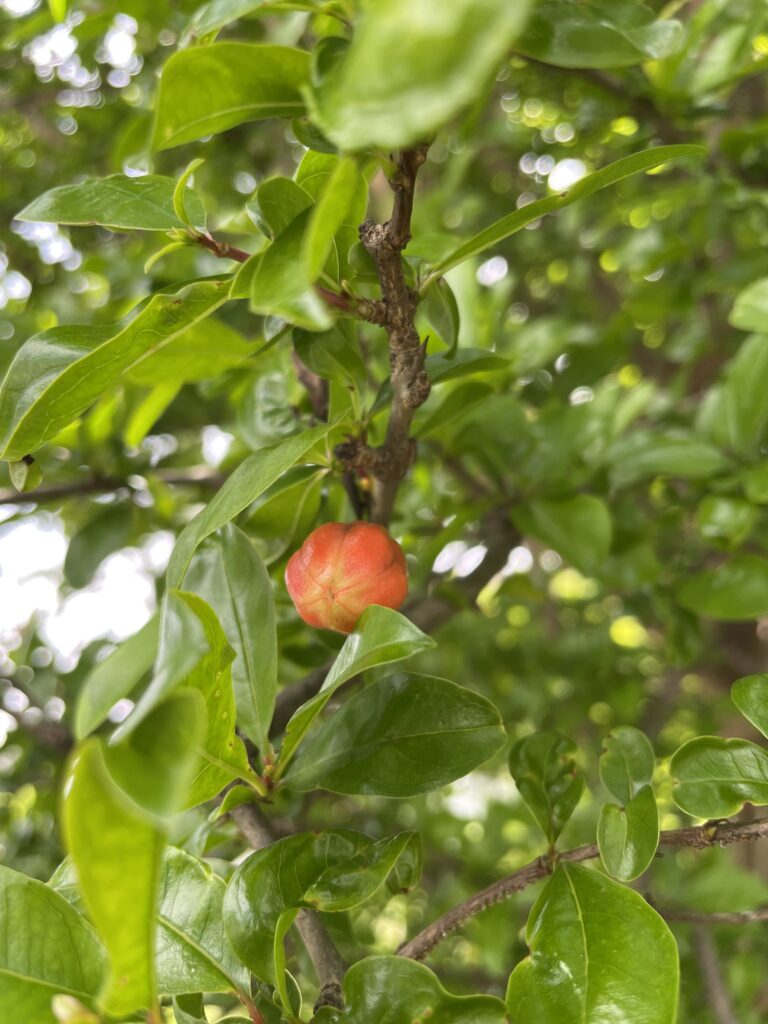
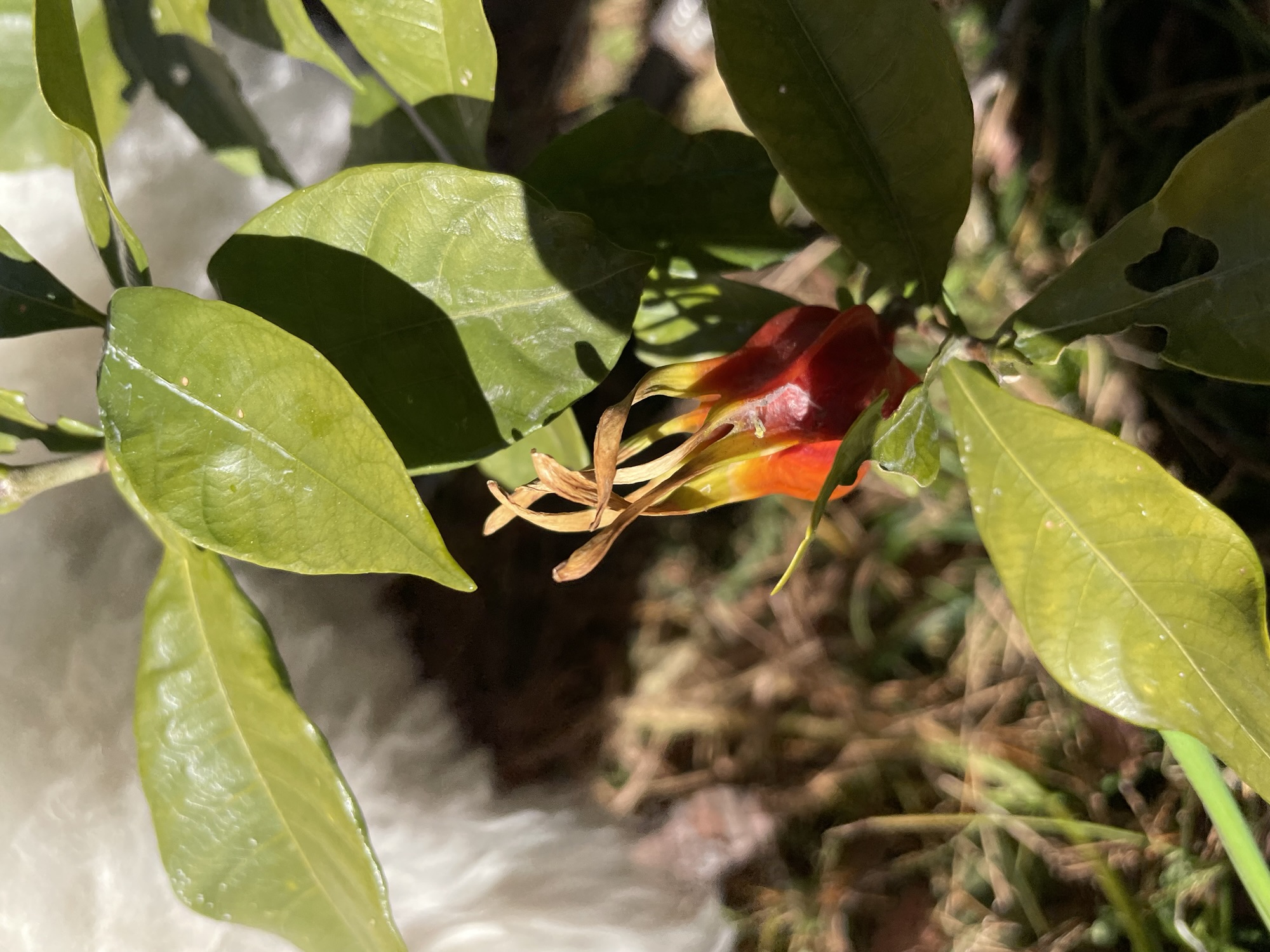
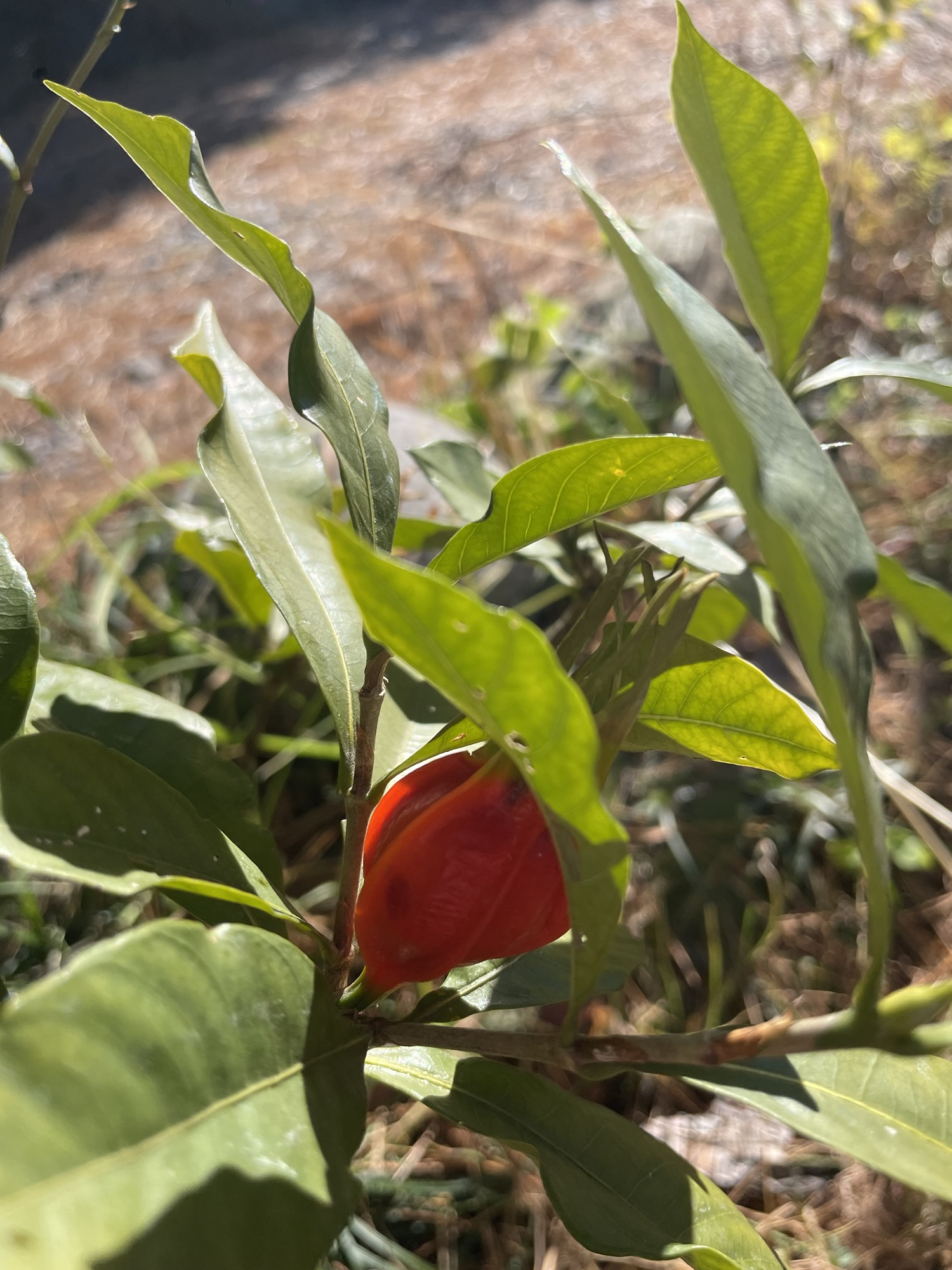
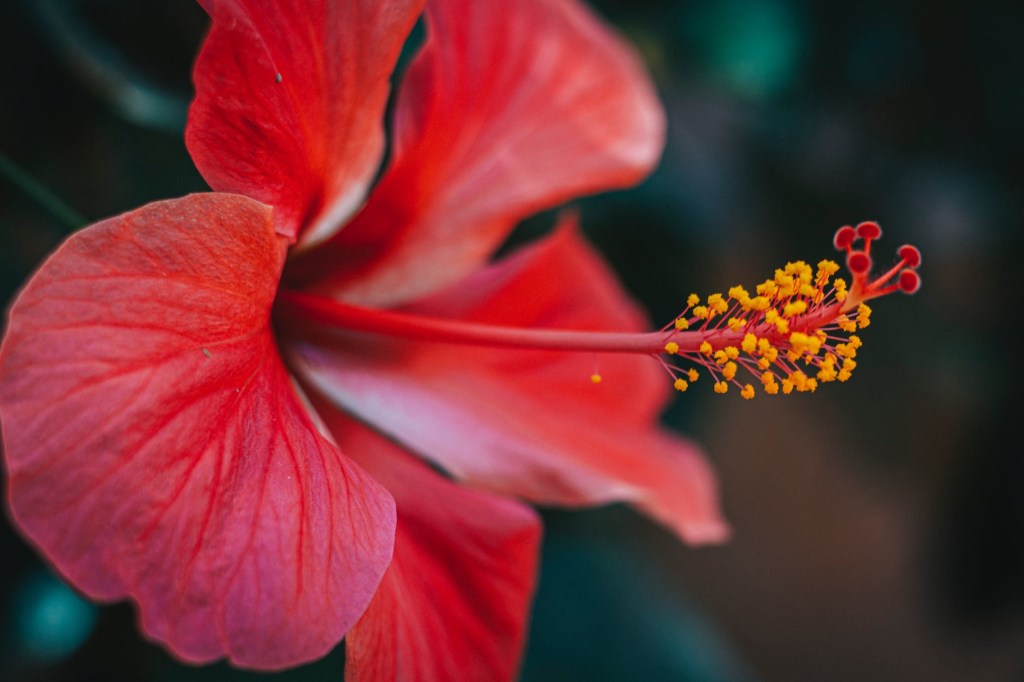
In my garden grows a pomegranate tree that has been here since before I was born — over 50 years old. Every autumn, it produces around 50 bright red fruits, filling the garden with color. This year, I’m finally going to make my own pomegranate vinegar!
The Buddhist Legend of Pomegranate
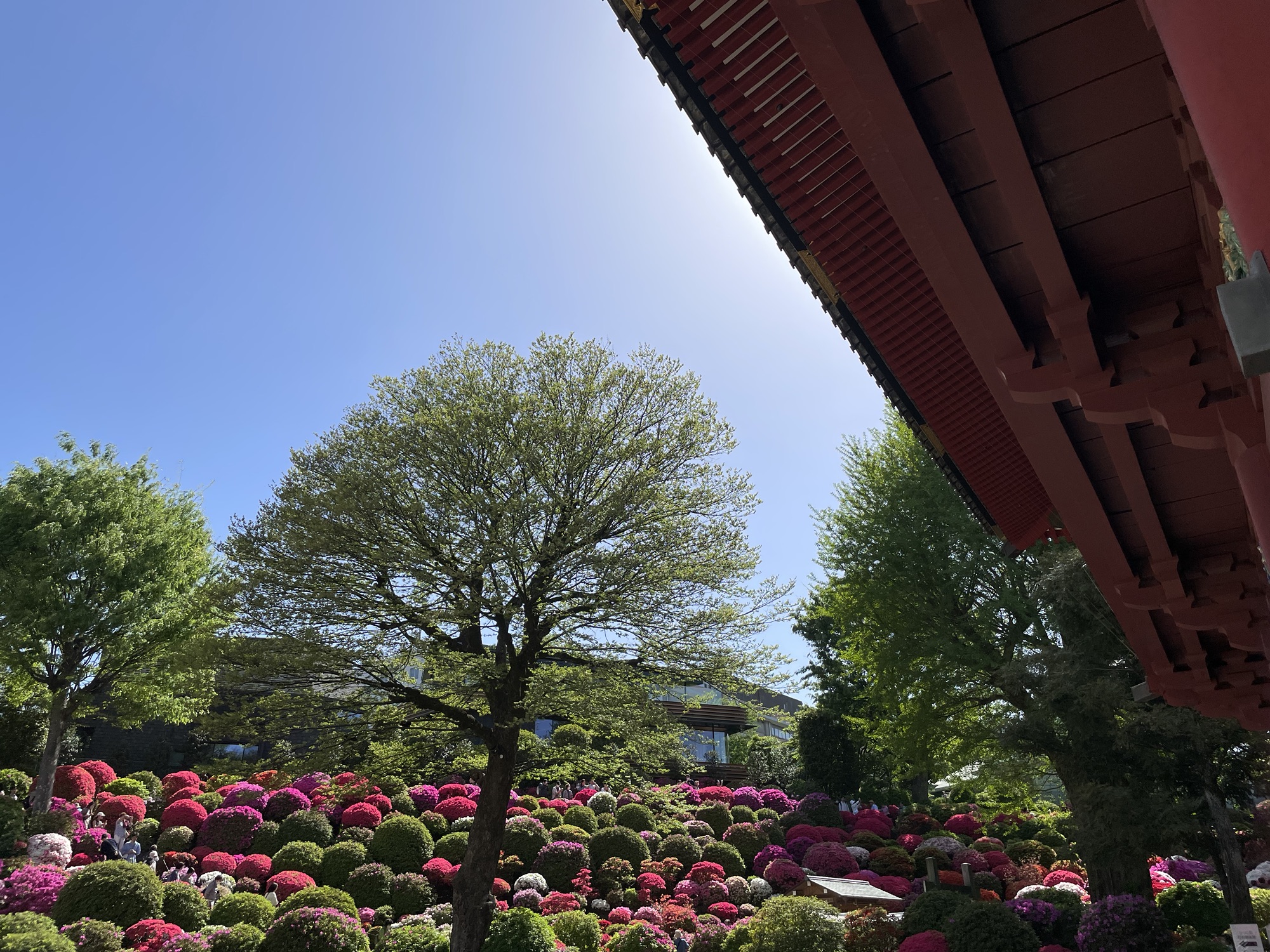
In Japan, pomegranate has a sacred connection to Buddhism. Kishimojin was a demon who devoured children — until the Buddha offered her a pomegranate as a substitute. She was transformed, becoming a protector of children. Her shrines in Tokyo’s Zoshigaya and Iriya are still visited by many today.
Beauty Secret from Korea to Japan
Pomegranate vinegar is hugely popular in Korea as a beauty drink — great for skin and anti-aging. The recipe is simple: equal parts pomegranate seeds, sugar, and vinegar. Mix and wait one month. I’ll be trying this myself this autumn!
Every spring, Japan transforms into a pink wonderland. Cherry blossoms — called sakura (桜) — bloom for just about two weeks, and the Japanese celebrate with hanami (花見), which literally means “flower viewing.”
Parks fill with people, laughter, and bento boxes. It’s one of the most magical experiences you can have in Japan.
But hanami comes with unwritten rules. Miss them, and you might accidentally offend the locals — or simply miss out on the full experience.
Here are 10 things foreigners need to know before their first hanami.
1. Arrive Early to Reserve Your Spot 🕖
In popular parks like Ueno or Yoyogi, people start reserving spots from 6 or 7 AM — sometimes even earlier.
The tool of choice? A blue sheet (ブルーシート) — a simple blue tarp available at any convenience store or 100-yen shop for just a few hundred yen.
You lay it down, leave it there, and come back with your group later. Yes, this is completely normal and accepted.
Pro tip: Send the newest member of your group or the person with the most free time. Waiting for a spot is a rite of passage in Japan.
2. There Are No Trash Cans — Bring a Bag 🗑️
This surprises almost every foreigner.
Japanese parks have very few — sometimes zero — public trash cans. The rule is simple: you bring it, you take it home.
Bring extra plastic bags to sort your garbage (Japan recycles religiously: burnable, plastic, cans). Leaving trash behind is considered extremely disrespectful.
What to bring: A few large zip-lock bags or convenience store bags work perfectly.
3. Don’t Touch or Climb the Trees 🌸
It may be tempting to grab a branch for the perfect photo, but please don’t.
Cherry blossom trees are fragile and carefully maintained by local governments year-round. Shaking branches or climbing trees can damage them — and you’ll get some very stern looks from locals.
Instead, find a spot where petals naturally fall around you. That’s the real magic.
4. Alcohol Is Usually OK — But Read the Park Rules 🍶
One of the most enjoyable parts of hanami is drinking with friends under the blossoms. Beer, sake, wine — it’s all part of the tradition.
However, some parks have recently restricted or banned alcohol. Always check the rules of the specific park you’re visiting before you go.
Generally OK: Ueno Park, Shinjuku Gyoen (check current rules), Yoyogi Park Check first: Parks near schools or shrines may have restrictions
5. Keep the Noise at a Respectful Level 🎵
Hanami can get lively — music, singing, laughter. That’s all part of the fun.
But be mindful of neighbors. If the group next to you is having a quiet family picnic, keep your volume in check. Japan values reading the atmosphere (空気を読む, kuuki wo yomu).
A portable Bluetooth speaker at low volume is fine. A full DJ setup at 11PM? Probably not.
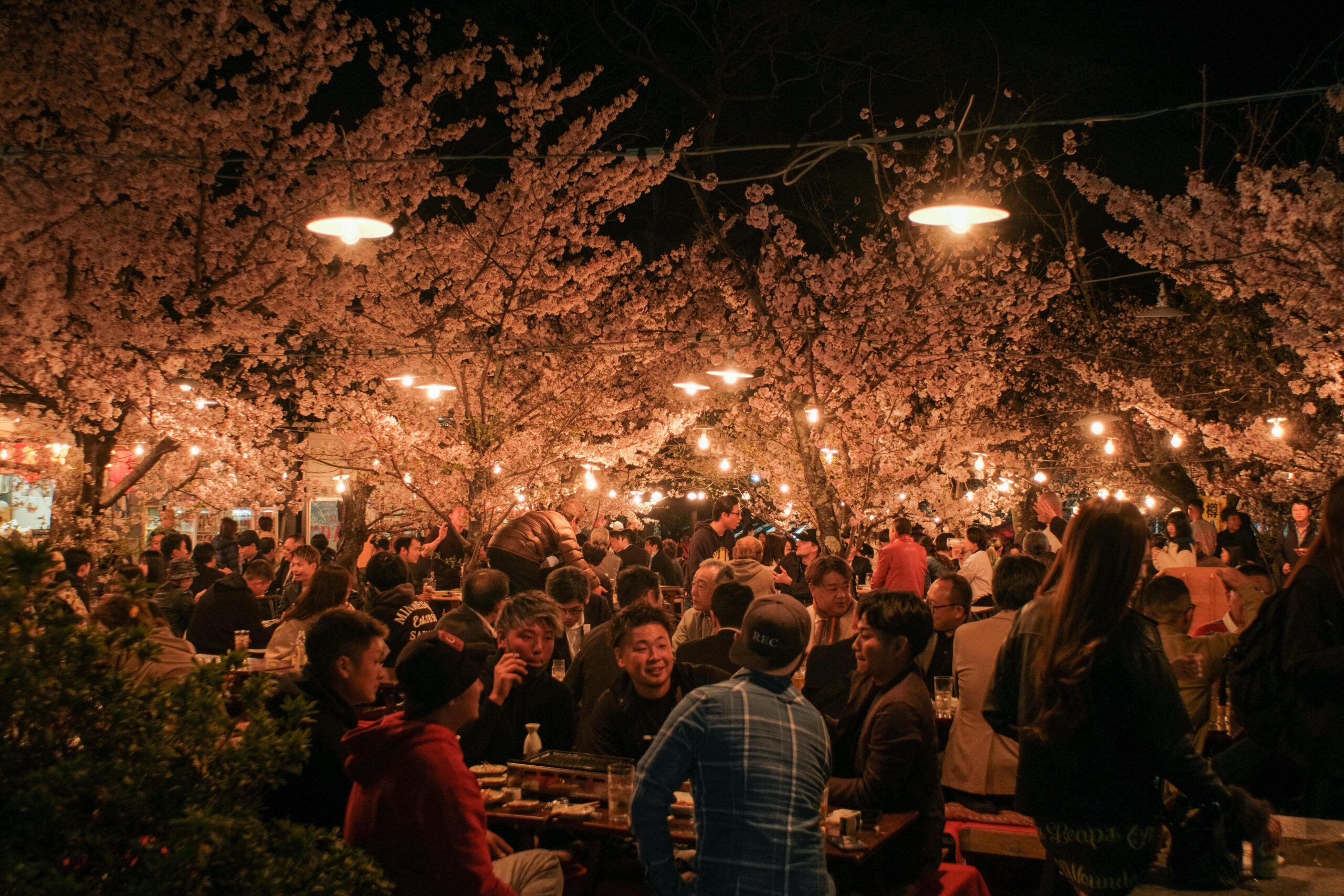
6. Daytime vs. Night Viewing — Two Completely Different Experiences 🌙
Yozakura (夜桜) means “night cherry blossoms,” and it’s breathtaking.
Many parks illuminate the trees after dark, creating a dreamlike atmosphere. The crowds are different too — more romantic, more mysterious.
Daytime hanami: Bright, social, family-friendly, great for photos Night hanami: Atmospheric, romantic, less crowded, lantern-lit
Try to experience both if you can.
7. Ask Before Photographing Strangers 📸
Japan has strict privacy norms. Taking photos of strangers — especially children — without permission is considered rude and can cause serious problems.
If someone accidentally appears in your shot, it’s polite to either delete the photo or blur their face if you post it online.
When in doubt, ask: “写真を撮ってもいいですか?” (Shashin wo totte mo ii desu ka?) — “May I take your photo?”
8. What to Bring to Hanami — The Essential Packing List 🎒
Here’s what every experienced hanami-goer brings:
Blue sheet / picnic mat — for your spot
Bento box or convenience store snacks — onigiri, sandwiches, karaage
Drinks — beer, sake, non-alcoholic options
Trash bags — multiple, for sorting
Wet wipes & hand sanitizer — limited facilities in parks
Warm layers — early April mornings can still be cold
Camera or phone — fully charged!
Cash — some park vendors don’t accept cards
🍷 Love wine? A light rosé or sparkling wine pairs beautifully with cherry blossoms. Explore a curated selection of imported wines delivered to Japan →スミレ色の白ワインをご存じですか?
Want to make the most of hanami season? This all-in-one Tokyo travel guide covers the best sakura spots, seasonal tips, and local etiquette — everything you need for the perfect cherry blossom experience! 👉 Tuttle Travel Pack: Your Guide to Tokyo’s Best Sights (Amazon)
summarize the estimated cherry blossom front in Japan for j 、This year, it’s said that areas like Kanto and Eastern Japan are expected to bloom slightly earlier than usual.
⭐️Tokyo and Kanto: expected to bloom around March 20th, 2026 this year!
Cherry blossoms are flowers that symbolize spring in Japan and are loved by many people. It is said that Tokyo is expected to be in full bloom on March 30, 2025, but…
26/03/2025
東京満開にはもう少しかかりそうです♪
東京の桜情報でした!ではまた次回!
It seems like it will take a little longer for Tokyo to be in full bloom♪
It was information about cherry blossoms in Tokyo!
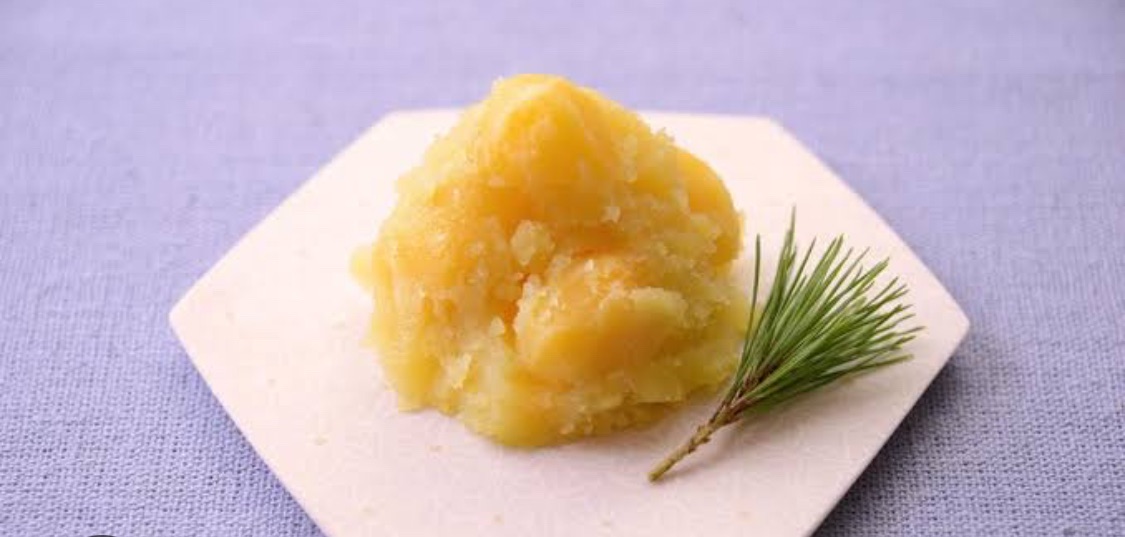
The origin of Kurikinton lies in the chestnut that the Japanese people have been eating since ancient times.
The history of chestnuts is very old, and it is recorded in the “Nihon Shoki” established in the Nara period (720) that the cultivation of chestnuts was encouraged by the Emperor.
At that time, chestnuts were mainly boiled or roasted, and were not considered as sweets, but later a process of “squeezing boiled chestnuts in a 茶巾Chakin was invented, giving rise to the prototype of the current 栗きんとんKurikinton.
The turning point in history came in the late Edo period. It was in Nakatsugawa (now Nakatsugawa City, Gifu Prefecture) that became the birthplace of Kurikinton.
At that time, Nakatsugawa, located along the 中山道 Nakasendo, one of the five major highways, was also one of Japan’s leading chestnut-producing areas. Taking advantage of this strength, many confectionery craftsmen in the area started making Kurikinton, and stores selling it were established one after another.
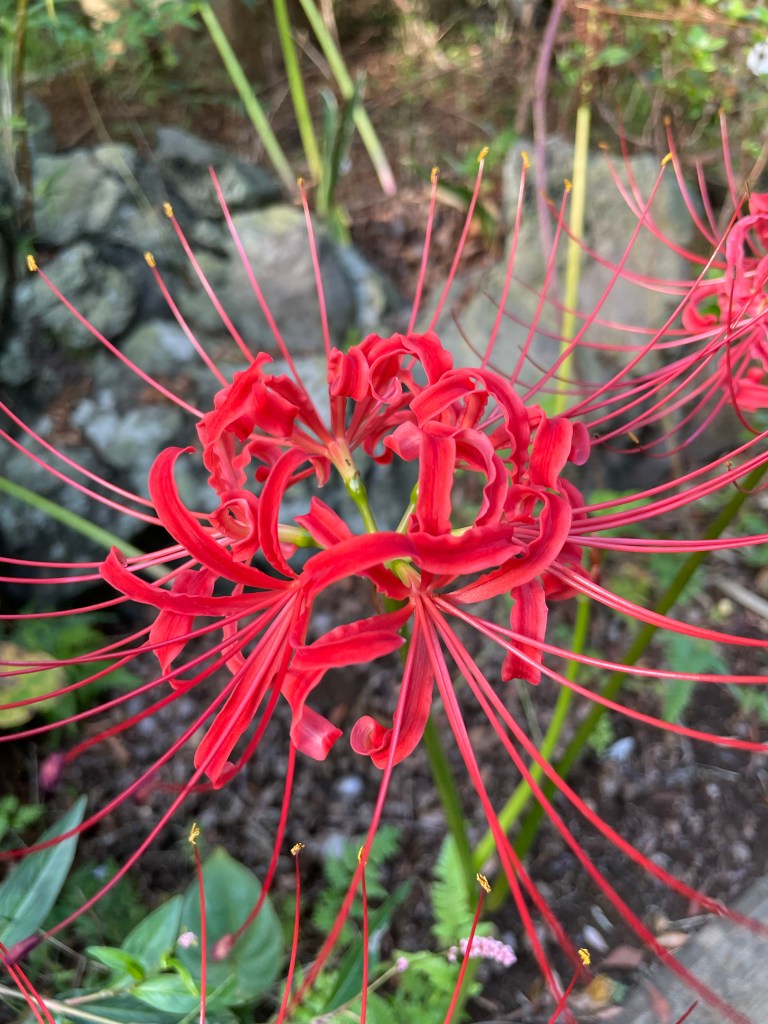
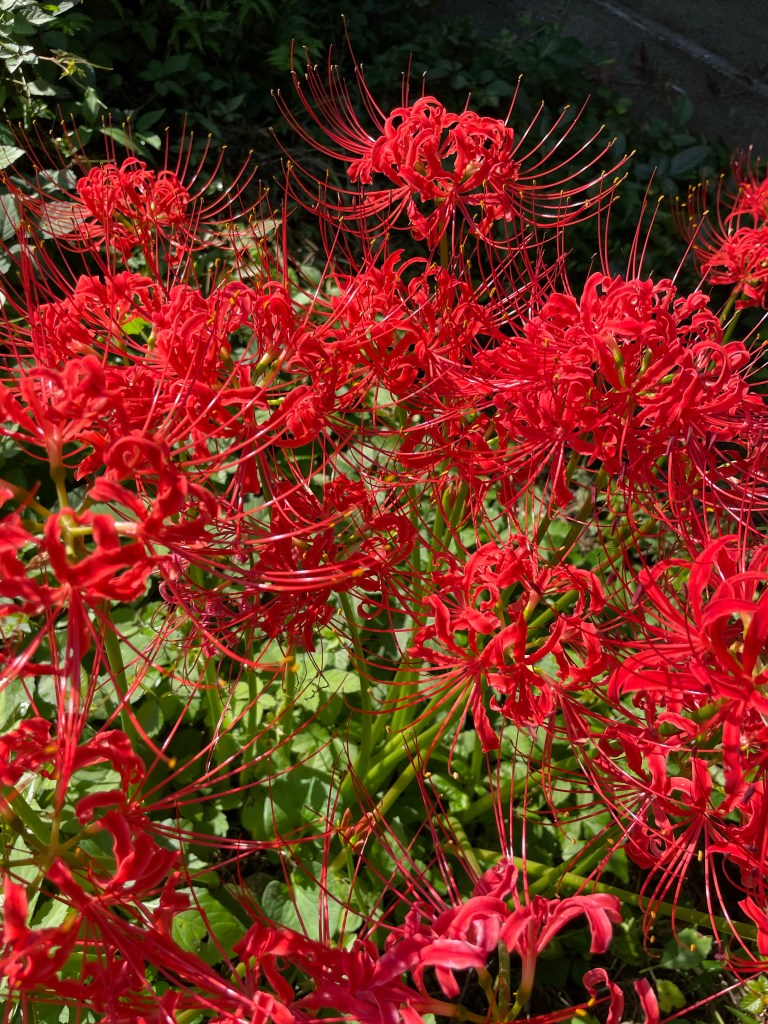
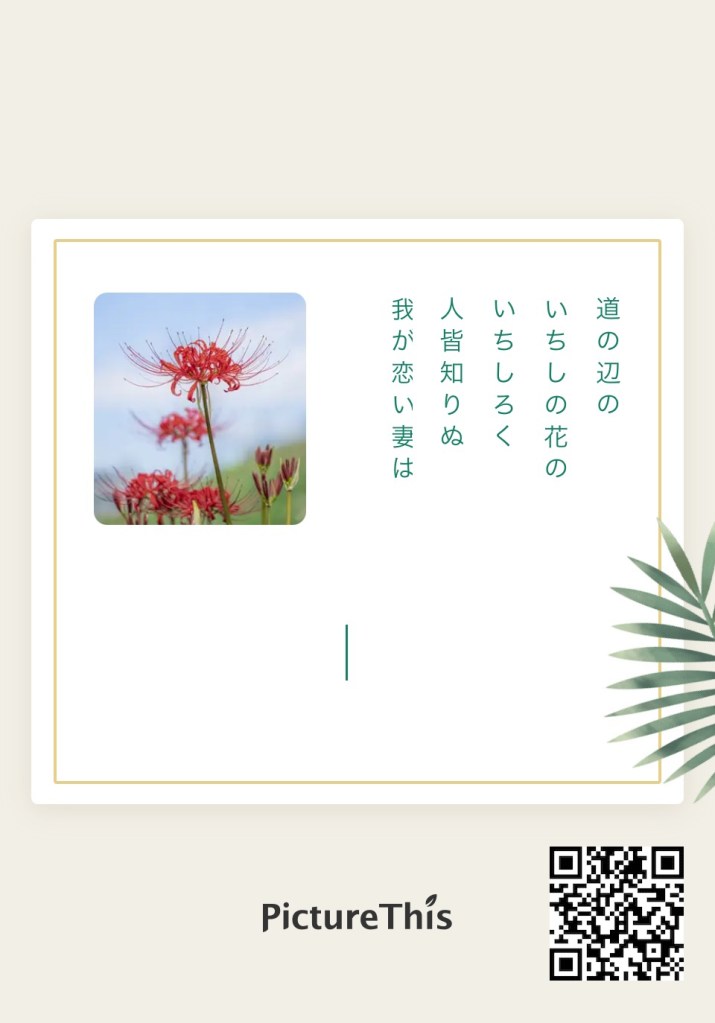
In Japan, higanbana (higanbana) is a flower that grows in clusters alongside roads and on banks, heralding the arrival of autumn. When it comes into bloom, only the stem grows quickly and bears a single red flower, followed by the sprouting of thin leaves. For a long time, it was considered an unlucky flower in Japan, as it was planted in cemeteries and was often associated with death.